Avoiding Another Dumb Management Mania-The Disposable Worker

Don't Fall Off the CliffNote from Art: my rant is dedicated to helping keep what is in some circumstances a reasonable business tactic from becoming the latest value-destroying mania.

I wrote last week on “Thoughts on Leading and Managing in the Era of the Disposable Worker.” The post was prompted by an article in BusinessWeek, outlining this latest gem of management wisdom that has organizations of all types rethinking the need for employees and shifting to contract workers.   Positions from the CEO suite to those types of roles that we’ve become accustomed to outsourcing, and everything in-between, are fair game.

I’m traditionally leery of fads of all sorts, as they tend to be driven by hysteria, causing normally sane and rational people to act in a manner that defies explanation. I’m fearful that we are on the brink of another horrendous, value-destroying mania as we embrace the short-term cost convenient fad of creating disposable workers.

A Few Examples of Manias Gone Horribly Wrong:

It wasn’t’ so long ago, that almost everyone wondered for just a moment whether the laws of economics had been suspended as the internet gold rush began. Those of us on the sidelines were left to wonder why we weren’t as smart as everyone else and still valued profits over clicks and eyeballs.  For a short period of time, our world was one where gobs of money flowed to people with ideas that included losing all of it and then some, and market valuations for firms without a single customer exploded from here to Jupiter.  Anyone that dared to question this environment ended up running away from a bunch of options-toting visionaries lest they be trampled in the stampede of outrage. How dare we not understand that clicks and eyeballs were the new replacement for profits and that anyone that could throw around the phrase “data aggregation” was worth funding.

Eventually, the laws of physics and economics reasserted themselves, the dot come bubble burst and we spent a decade creating a new mania in the housing market.  Once again, the rules of common sense and gravity won out, yet tens of millions of normally rational people succumbed to the mania and many have lost much more than paper options.

As a wise teacher once indicated, “There is no such thing as a money machine.”

Opinions, Thoughts and Irreverent Observations on this Potential Next Mania:

All of this brings me back to the latest rage of firing your employees and hiring contract workers to staff your business.  For those of you new Management Messiahs that are leading the charge here, I have a few questions, observations and answers for you:

  • Opinion: Turn core, value-creating roles into contract workers, and you will be selling your soul to pay the number crunchers and analysts.
  • Opinion: You cannot sustain any form of business performance excellence with a transient workforce.
  • Question: How will you replace that invisible but palpable thing called culture and how will you build a high performance culture around nameless, faceless drones?
  • Observation: Once your competitors identify all of the talent that you’ve alienated, it will be open hunting season and you’re what’s for dinner.
  • Observation: your global competitors are not foregoing their futures by emphasizing the numbers in the present.  A short-term time orientation is a powerful dimension of U.S. business culture and thinking, and it is a weakness.
  • Question and Name Calling: Why is this your BEST answer for competing?  Is that all you’ve got?
  • Double-Dog Dare: Study firms that have made a near religion out of valuing the employee.  Start with SAS Institute.  There is another way if you have the courage.
  • You’ve Been Served: in case “maximizing shareholder value” is driving your decisions, consider Drucker’s rebuke of that modern rationalization for the organization: “the purpose of the firm is to acquire and keep customers.”

The Bottom-Line for Now:

The future of business and any company and perhaps of America is based on finding, cultivating and keeping the best talent.  There are no circumstances that I can imagine where shifting core value creation roles to contract workforces will help you succeed in this increasingly complex world.  Resist the urge to follow the herd and challenge yourself and your team to focus on solving vexing customer problems and building value in meaningful ways.

A Fresh Voice and Leadership and the Art of Apology

There’s an excellent post entitled, Sorry is not the final word, just the beginning,” by guest author and Product/Project Management Consultant, Lisa Winter at one of my favorite blogs: The Art of Project Management. hosted by the UCSC-Extension in Silicon Valley.

Ms. Winter describes a situation where she inadvertently upset a valuable but delicate team member on a conference call, and then went to significant lengths to apologize and regain his support. In addition to the happy ending, this fine post prompted some thoughts on a topic that I confess I’ve not spent a lot of time thinking about: the role of the apology as a leadership tool.

I can’t help but feel a little guilty that I’ve not raised this topic in the past, and for that, I apologize. (OK, I had to work it in somewhere…)

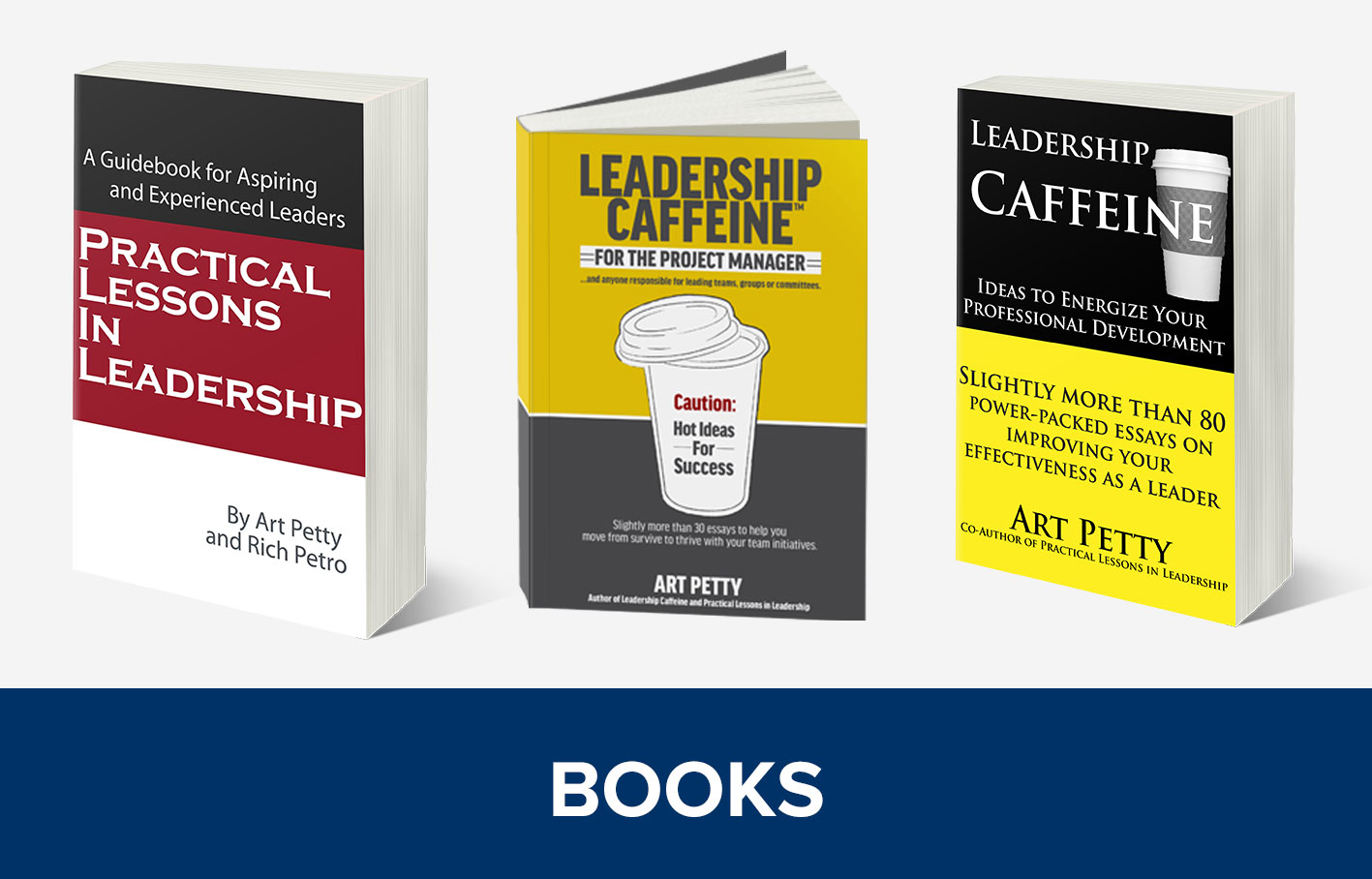
I have written extensively here at this blog and in Practical Lessons in Leadership on the need for leaders to not mask their own faults and shortcomings. In the book, I suggest that the point in time where everyone on the team sees the leader’s mistake is a powerful moment of truth. The leader can run, hide, dodge and deflect or she can show the team that she is human and leverage the failure as a teaching tool. Of course, this only works if she practices this same technique in the other direction when groups or individuals face setbacks.

But what about the apology? How many times have you observed someone in a position of authority make a decision that turned out to be horribly wrong and come back with an apology?

What about the leader that responded to you in a curt or less than respectful manner?

Good thing you didn’t hold your breath, waiting.

At least one of our national leaders went to the opposite extreme, seizing the opportunity to apologize for all of the nation’s historic mistakes ad nauseum (in my opinion). Rumor has it however, that he might not have been quite so apologetic for his alleged personal mistakes. Frankly, it was hard to tell when he was being sincere and when he was selling. You can draw your own conclusion, but I think Bill would have been a powerful force on a used car lot. (Sorry to those that I offended and Bill, I’m sorry too! Hey, this is getting easier!)

OK, enough tongue-in-cheek. Here are some of my thoughts on the issue and use of the apology as a leader. I’m looking forward to hearing from you, and again, if I’ve offended…

Leadership and the Apology

  • Learning how to say the words, “I’m sorry” or “I was wrong” should be mandatory training for all leaders. Part of gaining trust and building credibility is showing everyone that you are human. Knowing how and when to use the words is the art of apologizing.
  • You can easily adopt “apologizing” as a tactic and that is as incorrect as avoiding the apology when you’ve erred. Abuse the tool and people will quickly see through your disingenuous approach. I’ve observed early-career and first-time leaders that would assert themselves (appropriately) and then apologize for having had to assert themselves. This destroys the leader’s credibility.
  • As a leader, you have to make tough calls and often those calls result in some pain. There are many, and perhaps most circumstances where an apology is not needed and would horribly derail your credibility.
  • In circumstances where you’ve slipped and truly offended someone, run, don’t walk to apologize to the individual.
  • Too many apologies for program failures or not hitting your goals and targets, and you will find yourself apologizing to your significant other for losing your job. As a subordinate, you might get away with this once, but as soon as it becomes a pattern, your boss will see your apologies as a mask for incompetence.

The Bottom Line for Now

Does leadership mean never having to say you’re sorry? I don’t think so. Nonetheless, I suspect that most leaders rarely utter the words, more out of fear of showing weakness than due to their lack of remorse for their transgressions.

What are your thoughts? I’m interested and suspect many readers are as well on the role and use of the apology as a leader.

Management Lessons From the Memphis Belle-Rule #1

Note from Art: It is a pleasure and a privilege to have Eric Lieberman publishing his Management Lessons from the Memphis Belle as a guest author here at Management Excellence.  I had the pleasure of working for Eric and the co-creator of the Rules, Paul Byrne, and it is exciting to see the wisdom that helped us navigate so many challenges come to life here on the blog.  Just as the world waited eagerly for the next installment from Dickens to learn the fate of Little Nell, I predict you’ll find yourself looking forward to future installments of these creative, powerful and practical rules for managing and leading. 

Sometimes the power of a rule is found in its exceptions

When my father learned that I had been drafted by a board of directors to lead a failing software company through a financial turnaround, he reacted: “But, what do you know about running a business?”

The words stung – but he was right: I knew nothing. I’d been an attorney for a wide variety of businesses for years – but had never been responsible for a bottom line, never done a budget, never managed people and had never created a strategic plan!

I began looking everywhere I could for advice. I devoured business and management books by the carload. Most often, I found good counsel in the talented people – like Art Petty – that surrounded me. They brought the experience and skills to the corporate table that I lacked. But, the single most unusual fount of wisdom came one night when my CFO, Paul Byrne, and I drank a bottle of Thompson’s Bourbon Whiskey in the corporate house we shared in Wisconsin and watched the 1990 movie The Memphis Belle.

The namesake of the movie is an Army B-17 WWII bomber (“Flying Fortress”) whose crew had flown 24 missions into enemy territory. According to military policy, the crew would return home if they returned safely from their 25th mission. The movie tells the story of that final mission.

We were in the early days of our trench warfare trying to save the company, so it was natural that we felt a kinship with the pilot and crew of the Belle. As we drank and watched, we began to discover business rules and management lessons within the war-movie plot. By the time we were done, we had Ten Rules of Management From The Memphis Belle. Then, Paul came up with an 11th. I cussed and said “you can’t just have an odd number like 11” – so we replayed the movie in our heads and thought of 9 more.

And thus we discovered the 20 Lessons From The Memphis Belle. We had them printed up on little cards and handed them out to employees. We gifted them to strategic partners and customers. We printed them on posters and hung them in our offices. When we ran into a hard issue in the business we would refer to the Rules: more often than not there was a rule that was right on point. Each time we’d be amazed, but then we’d say: “Ah! The Rules know all!”

I credit these rules with getting me through difficult times. Even today, after leaving the company upon accomplishing a turnaround and eventual sale, I see the continued applicability of these rules to the difficult times we face today. And so, when Art offered some of his blog space for me to do “my thing”, I jumped at the chance to share these rules with a broader audience.

Today, and in weeks to come, I am going to share the rules with you, describe their origin in the movie and illustrate their applicability with some real-world stories. its not mandatory – but you might think about renting the movie and watching it along with these articles.

Ironically, rule number one echoes my father’s comments to me:

Rule No. 1: Don’t pretend to do jobs you’re not trained for!

Val, the bombardier of the Belle, boasts that he has medical training. But when one of his crew-mates is seriously wounded by enemy gunfire, the bombardier must admit to having had far less medical expertise than he had claimed. Val proposes that the only way to save the wounded crew member is to parachute him into enemy hands and hope that he is rushed to a hospital. “Bad plan” say the rest of the crew, and the bombardier successfully treats his wounded mate despite his fear and sense of inadequacy.

Despite his lack of training, Val had the courage and resolve to succeed.

It doesn’t fare so well for another crew member that wants to try his untrained hand at one of the big on-board machine guns. Convincing the real gunner to let him try, he loses control of the gun and slices through another B-17 sending it crashing to the ground in flames and killing its crew.

Sometimes, it is just plain dumb and dangerous to put people in charge that don’t know what they are doing. But, sometimes…

When I was picked to run the company, I clearly didn’t appear to be a person with the right qualifications. I didn’t have the usual training or experience to accomplish what I needed to do. And yet, the board saw in me certain strengths and qualities that they valued more than traditional qualifications. For example, an old law partner told them that I was a “workaholic, he will not rest until the job is done”. And, they made a good call: I succeeded!

I had a young man working for me who was simply an outstanding person. He’d started in the company as a staff guy supporting the company’s internal computer systems and worked his way up the ladder to head the IT department. Despite his technology training, he proved to be a “Jack of all trades”. He was loyal to the company, a great leader and had a “can do” spirit that was unbelievable. Point him in the direction of a mission – and he would accomplish it without fail! I recognized his talents superseded any particular training he had, and I was able to deploy him in a variety of key company positions well beyond IT services. He was a big contributor to the success of the company. If I had limited him to his trained position – IT – I wouldn’t have been able to take advantage of the broader range of skills and talent that this “Jack” had.

Lesson Learned:

When you have a mission to complete, a task to be accomplished or a job to be filled, take inventory of the candidates and their qualifications. At times, on-the-job training might just be inappropriate. Be alert, though, to circumstances that require betting on a candidate that may be non-traditional. Before you write off someone for a position or a mission, figure out whether they have the courage, the mettle, the “right stuff” to succeed in spite of your perception that they lack the obvious qualifications for the job. Always consider whether the obvious qualifications for a job are really the true qualities that will define success. Don’t simply evaluate candidates – always test the premises of your qualifications.

Next time: Rule #2: Don’t Applaud the Event (especially good news) before it happens!

About Eric Lieberman: Eric Lieberman writes from his home in Evanston, Illinois and is available for comments and consultations and can be reached via e-mail. by writing ejlieberman@gmail.com.  Click here for Eric’s personal website and resume.


Too Many Projects Chasing Too Few People-It’s Time to Learn to Say No!

One of the themes that I hear consistently in workshops and in discussions with the professionals in my MBA classes is frustration over the propensity of a firm’s leaders to never say “No” to a project. 

Lacking a viable mechanism to compare, evaluate and select and reject projects, decisions are made based on politics, gut feel and the squeaky customer wheel. 

The net result of this lack of discipline is that the people doing the work end up overloaded and overwhelmed.  They operate in compliance mode, focusing on surviving until the next deadline and adding little creative value or innovation to their activities.

This is a perfect formula to waste money, squander creative energy and decimate morale.  This “we never met a project we didn’t like” approach is also the antithesis of the formula for performance excellence.

The current economic pressures amplify the need to create better screening mechanisms and to truly manage your investment in projects with rigor and discipline.  You need to deliver the right projects effectively, and you need to learn to say “No” to some that seemed like a good idea last year and many that will jump out at you during the next year. 

Take a look at the portfolio of projects that you and your colleagues are engaged with today and make each of these projects earn their way back into the portfolio.  It’s OK and even healthy to challenge yesterday’s priorities as they bury people in today’s work. 

Use these filters:

  • Why are we doing this project? What are the assumptions that made it seem like a good idea before and are they still valid?
  • Is it a must-do or compliance initiative?
  • Is it strategic?  If yes, you should bounce it up against the current-state strategy and determine whether it is still relevant today.  If not, kill it.
  • Is it an operational improvement?  If yes, can you connect the operational improvements to something that impacts strategy and customers…even through one or two degrees of separation?  If you cannot connect it to something that allows you to serve customers (internal or external) more effectively, consider killing it.
  • Do we have the right balance of strategic and operational initiatives?
  • Are we evaluating projects based on a combination of objectively developed financial and non-financial criteria?  Does our evaluation approach allow for reasonable comparison of alternatives? 

If you struggle to answer these questions because your strategy is vague or out of date, you’ve got another problem that needs to be fixed.  While some decry the usefulness of strategy in a time of crisis, I would argue that now more than ever is the time to create a robust, dynamic strategy and execution program.  Instead of wandering aimlessly through the minefield of the economy, I want a team that is opportunistic, experimental and focused on finding and exploiting gaps and ignoring distractions.  This is strategy. 

The bottom-line:

Your organization executes strategy one project at a time.  Too many leaders fail to support the creation of processes that effectively evaluate and manage the nearly endless list of options to work on.  Start the process by refreshing on strategy and then work unceasingly to manage and cull the portfolio in support of the strategy.  Learn to say, “No” and you’ll be shocked at how much great work your team will complete.  You might even find them smiling as they work.  

The Right Stuff: Sprinting Towards the Future

It’s easy to focus on the bad news.  Everyone’s talking about it.  We’re bombarded with news flashes and human disaster stories as the layoffs mount and the foreclosures climb.  And make no doubt about it, these are tough times, but let’s start giving some coverage to the firms, leaders and entrepreneurs that have turned off the news channels and are too busy building or rebuilding to worry about the dire forecasts.

For a good dose of “can do” spirit, get out of your office and go talk with some smart people working to strengthen, build or start businesses.  I’m doing just that as I work with a colleague to gain market feedback for a new business venture that we are considering. 

We’re talking with the best battle-hardened, seasoned executives and operators that we can find.  The type that would have no qualms telling us that our baby is ugly. So far, they’ve highlighted a few flaws, but no one is using the U-word.

The great by-product of these discussions is the insights we are gaining into people and firms and their approaches to working and building while too many other people preoccupy on failure. 

Here are a few themes of success we are hearing from people that are sprinting towards the future instead of hiding from the present:

-Savvy operators see opportunities to out execute their skittish competitors and are strengthening every part of their firm, from people to processes, and focusing on driving results that will translate to growth.  The lack of a rising tide is actually exciting to these operators.  It’s an opportunity to pick up talent, gain customers and gain market share that will fund future investment and growth. 

-The smart firms in the venture community have a new formula: build to sustain.  Instead of the traditional model which was buy low, pump up and sell high as quickly as possible, the smartest operators are embracing the new reality by backing their firms with the best experts that money can buy and those experts are helping the firms improve execution around core tasks like development, product management and marketing.  Instead of the former oversight & badger model, the venture firms are taking responsibility to support strengthening in areas that will create value for years to come. In the words of one leader, “this is hard work, but worth it.”  

-Other entrepreneurs see remarkable opportunities in the application of new technologies to helping people manage their lives. From the Trunk Club for Men that I am now a proud customer of, where technology meets, expertise, meets convenience for men’s fashions, to new devices and programs underway to help millions of people manage difficult health problems, the entrepreneurial spirit is alive and excited about the potential.

-In chatting with the great professionals at Construx , a leader in advancing best practices in software development effectiveness, one gets the impression that what they offer is more valuable and more in demand than ever.  Their recent announcement allocating 25% of the seats in their open-enrollment workshops at no-charge to unemployed developers is both a testament to the firm’s values (I’m a former customer and got to see these values first-hand) and a remarkable gesture to support the continuing education of industry professionals.  Face it, it’s also a brilliant way to strengthen people’s allegiance to the firm. No momentarily unemployed developer will ever forget Construx’s help.

 –

I like what I am seeing and hearing.  The focus on operational execution underscores the need to focus on procuring and strengthening talent. 

The “run to sustain” model takes into account the new formula for creating value…which is of course the same one as the old model that we keep forgetting in a “mania-a-decade” world.

The focus on looking at today’s crises and creating solutions to either eliminate or to help manage is just great business. 

Hey Leader, Your Baby is Ugly

I can’t complete this piece without looping back to the reality faced inside many firms.  I talk with and teach hundreds of great professionals through workshops and in classes and what I continue to hear is that YOU (leader) don’t get it.  The nightmare stories of poor execution, misalignment, missed opportunities and waste are coming from people that want to help and fix, not people that relish the opportunity to complain. 

Try listening to your people and then try freeing them up to save your skin before throwing them into the street.  If someone has to go, throw yourself out first.  Of course, you probably don’t have the courage to do that, so focus on my first suggestion.

The Bottom-line for now:

Next week I travel to The Data Warehouse Institute’s World Conference to deliver my workshop on Leadership for Technical Professionals.  The pre-enrollment numbers are great, and I view this as a sign that everyone…even the most creative and brilliant of our technical professionals are seeking opportunities to grow and contribute.  I’ll also be looking and listening for more signs of success.  While the storm in our economy is nasty, I like the forecast just a little bit more with every conversation.  

Next Page »

Art Petty

Art Petty Welcome to Management Excellence where the focus is on building better leaders and creating high performance organizations.

Building Better Leaders

Building Better Leaders - Move Your Career Forward

NEW: Art Petty's Building Better Leaders offers distance education PLUS personalized mentoring for motivated professionals. Executive-developed and delivered programs to fit your schedule and budget and boost your career.

Start Today:

Marketing Coaching

Authorized Duct Tape Marketing Coach Art Petty helps small business and professional service owners implement lead generation systems.
Learn more about Art's Marketing Coaching.

Management Excellence Tools

Download the Management Excellence Guide to Trade Show Marketing in a Recession.
What's Your Strategy & Execution (STREX) Quotient? Download and use the survey to help you gauge your organization's Strategy & Execution effectiveness and identify areas for improvement.
New e-book! Leadership and the Project Manager - Developing the Skills that Fuel High Performance Download the pdf or go to the e-book pages on this site and contribute to the conversation

Blog Subscriptions

Email:

RSS Feed Subscribe to Management Excellence

Connect With Me On

View Art Petty's profile on LinkedIn
Art Petty on Twitter

E-Newsletter Mailing List

Join my e-newsletter mailing list and receive the latest in best-practices content for leadership, sales & marketing and strategy.
E-mail:  
Privacy by SafeSubscribe

Alltop