
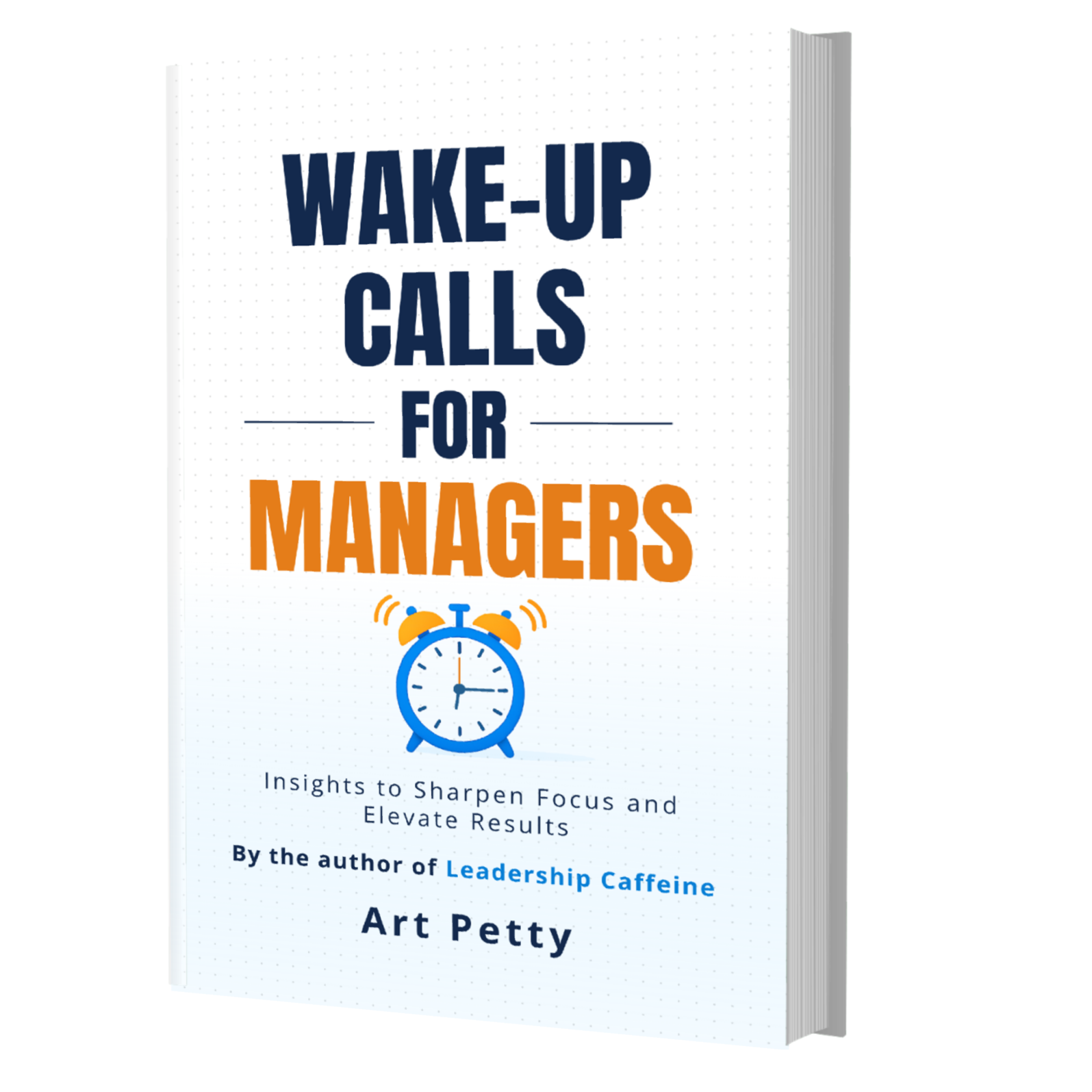
Wake-Up Calls for Managers
For the hard parts no one prepares you for
When the path isn’t clear, the stakes are high, and the answers aren’t obvious—this is where managers struggle most.
Wake-Up Calls for Managers delivers practical, real-world guidance for navigating:
- Tough conversations
- Leading through uncertainty
- Building influence without authority
- Driving results through others
The Leadership Caffeine Blog


Career Reinvention Journal™—Don’t Let Fear Keep You Locked in Misery
We ran our latest career-focused event the other day: How to Get Unstuck & Take Control of Your Career, and as always, the commentary from the attendees was priceless. With over 300 registered and a great group in attendance, the chat stream was in full...
Career Reinvention Journal™—Don’t Let Fear Keep You Locked in Misery
As Frank Herbert offers in the classic science fiction book, Dune, “Fear is the mind-killer.” Don’t let your instinctual reactions to the idea of making a career change keep you locked into something that no longer works for you.
Planning Ahead for the Week: Three Items for Your Management Excellence “To Do” List
Every week represents an opportunity to improve your performance as a manager and leader. In spite of the setbacks of the prior week, the fire drills that caught you by surprise and your own lack of follow-through on your goals, every Monday offers a clean slate for you to fill. My very positive intent here is to offer you a few suggestions each week that will inspire your pursuit of continuous improvement. Enjoy and Prosper!
Your “Weekend Reading List” from Management Excellence
Beginning with this post, I intend to make “Your Weekend Reading List” a regular Friday feature. Most professionals that I know are too busy to carve out quality reading time during the week, and many have confided that they wish they would be more diligent about reading on the weekend. While I won’t be there to help you pick up the book or click on the link, I can at least try and remove the “I’m not sure what to read” excuse from your arsenal.
Is it Time to Tune Up Your Firm’s Values?
While Mission is the “reason for being” of a firm, the organization’s clearly stated Values are supposed to define critical behaviors, offer context for decision-making and generally serve as bedrock for defining culture. And like Mission descriptions, the Values are often collections of lofty thoughts that are so far removed from the minds and actions of employees as to be nearly useless.
The Counterintuitive Nature of Management Excellence
It takes no management skill whatsoever to spend a fortune building up clicks and it definitely takes no skill to slash budgets, cut headcount, freeze programs and hunker down and wait out the storm.
It does take remarkable management courage and skill to run against the crowd and conventional wisdom by investing in strategic initiatives and talent during tough times and resisting the temptation to chase mythical fortunes during boom times.
Management Excellence Tips for Tough Times: Rethinking Customer Segmentation
Rethinking your customer segmentation model is a potentially powerful approach for differentiating versus key competitors and for finding new needs that you can fulfill with your core capabilities. Experiment with the various ideas and strengthen your team’s execution skills in the process. In additional to the potential tremendous upside from solving customer problems, the energy and excitement generated during this process will convert the organization’s “sense of fear” into a “sense of urgency.”
Improve Strategy and Execution Planning with Project Management Practices
The application of professional project management practices to the strategic planning and execution program development cycles of an organization can eliminate many of the common pitfalls that derail these programs. While the Project Manager cannot guarantee that the insights and actions developed during strategy are the right ones, he/she can take away the organizational-risk that so often rears its head to doom the best intended initiatives.
Sustaining Performance Excellence in Business and in Life
It genuinely bothers me when organizations spend years and untold dollars reinventing themselves and succeeding with a quality framework (i.e. Baldrige or Six Sigma) only to show up in the business press as an organization fighting for survival. Achieving milestones and winning awards helps reinforce the progress on the journey, but leaders at all levels have to foster a culture that is perpetually dissatisfied. The fact is that the market never sleeps, customer issues/needs change constantly and there are always competitors interested in taking your share of the customer’s budge
Managing Resistance to Change
Resistance to Change in corporate life is a very real force, and of course, the bane of existence of the many advocates of change challenging you to put aside your fears and embrace the new way of doing things. You are going to pay for resistance up-front by dealing with it, or your going to pay during the life of the initiative. Some resistance can be overcome through training and education and the rest will only be solved with accountability measures. Proper investment up-front will hopefully minimize the cost and pain as the initiative unfolds.
In Search of the High Performance Team
I regularly poll my seminar participants and MBA students on their team-focused experiences in the workplace and I am consistently surprised when very few report ever being part of something that they would classify as a “high performance” team. The results of my unscientific polling are all the more surprising given that we live during a time when involvement in short-term projects with individuals across functions is a part of the regular work experience of most professionals.