
When the headline is personal
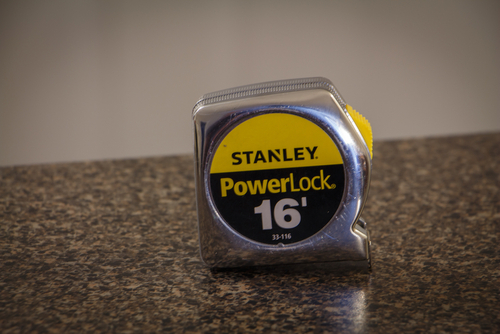
It’s rare that a story headline in my morning reads jolts me awake. This one in the WSJ did. “Storied Toolmaker Closes Its Last Hometown Plant — and Blames Its Tape Measures.” (Tiered paywall)
The news that Stanley (now Stanley Black & Decker) is closing its last facility in New Britain, Connecticut, unleashed a flood of family memories. My grandfather…my dad’s dad, was a 40-year Stanley Tools veteran, joining the firm during the Great Depression.
Rumor has it that the aunt who raised him decided his emerging professional baseball career was ‘beneath him.’ This was the depression, and ballplayers worked for practically nothing. Her boyfriend (another story altogether) was an executive at Stanley in New Britain and arranged for Grandpa to land a job selling tools.
Working from the Chicago area, Stanley became his life. The stories of his travels throughout his territory of Wisconsin and Illinois, his attendance at big company sales meetings, and the locker and the car trunk full of tools were part of my childhood. The sight of his company car with Wisconsin plates always stood out. He would love that I live in Wisconsin now and have spent much of my career working in this state.
A record-setting salesman
Ed Petty, Stanley Salesperson (left)
A few years ago, one of my brother’s good friends visited Stanley Headquarters. He reported seeing my grandpa’s name on a plaque identifying him as the firm’s first salesperson to sell $1,000,000 worth of tools in a month. I wish I had a picture of that plaque, but just the idea of his sales legacy makes me smile.
The case of The Magic Eye Door
One story that echoes in my mind was Grandpa’s visit to The Wrigley Building to meet none other than P.K. Wrigley, owner of the Chicago Cubs. The sales call was about giveaways for an upcoming game (small, Stanley razor knives…go figure), yet Grandpa identified another opportunity.
As he told it, Grandpa said he sat in the lobby area, waiting for the secretary to usher him into Mr. Wrigley’s office. As he sat there, he observed the office ladies (yes, all female at the time) walking in and out of the door carrying large stacks of books and reports. It was clumsy, and one individual even dropped her armload of items. After helping her pick them up, Grandpa asked the secretary to invite Mr. Wrigley to the lobby.
After greeting him, Grandpa invited Mr. Wrigley to sit down and observe the flow of the office ladies through the doors, complete with their big stacks of reports, and the clumsy door process. He said he had just returned from a sales meeting at Stanley headquarters and that there was a new product that could solve this problem: Stanley’s Magic Eye Door—a door that opened automatically when someone approached it.
Mr. Wrigley was impressed and ordered one on the spot. Grandpa’s telling of this sales vignette suggested it was the first one sold commercially; I cannot vouch for that. Nonetheless, what a great example of problem recognition and solution selling.
What you cannot get from a Hobby Horse and how it relates to sales quotas
 While many may not be familiar with a Hobby Horse toy, it was and is a stick with a horse head. Children put it between their legs and gallop around as if they were riding a horse. Toys were simpler then and didn’t require batteries.
In my career, I went on to lead sales organizations, and every year, as we would work on assigning quotas, a story Grandpa told echoed in my mind. During a national sales meeting after new quotas were announced, one of the more outspoken representatives spoke up in protest, saying, “You can’t get horsesh#t from a hobby horse.”
Frankly, truer words were never spoken. That saying remains an acid test of reasonableness for quotas in my mind.
Owning the stock
Grandpa had a saying: “Always own Stanley stock.” In my early teens, I had saved up enough money from odd jobs and newspaper routes to make my first foray into stock investing. My dad made arrangements through Merrill Lynch, and I became the proud owner of ten shares of Stanley Works (SWK) stock. I eventually made money despite what seems, in hindsight, like preposterous brokerage fees. My memory is fuzzy, but I recall something like $200 in transaction fees, a far cry from today’s no-fee or low-fee investment choices. Nonetheless, for many years, I owned Stanley stock.
Building a nation
The WSJ images of the Stanley complex in New Britain highlight the size and power this firm had in the world of tools. Stanley tools helped build the country, fight and win wars, and build the nation’s homes for decades. The firm is still present and even larger in its modern form, driven by lower-cost manufacturing worldwide. Yet, with the closing of the last manufacturing facility in New Britain, it’s different.
Falling Action
The complex in Connecticut is now gone, and a long chapter of life for a town is drawing to a close. For me, it just meant the final act of an entity that seemed larger-than-life through the eyes of a child. Or perhaps it was Grandpa who seemed larger than life.
