Systems Thinking Meets Platform Strategy and Social Media via Nike+

While I admit to being one of those people who views the idea of running as much more attractive than the actual running part (thus far, I’ve been satisfied to pass runners on my Specialized Road Bike, thank you), I’m blown away by Nike’s strategy with their Digital Plus business and specifically, their Nike+ program for runners.

It’s low tech (the shoe) meets media (Apple devices) meets social networking (the Nike+ community) meets platform strategy for Nike and potentially, marketing nirvana, based on the data and insights gained about their most passionate customers.  (Check out the Nike+ site to tune into the scale and scope of this initiative.)

There are strategy and marketing lessons here for all of us.

In the recent Fortune article, Nike’s New Marketing Mojo, the firm’s CEO, Mark Parker, describes a visual he had created awhile ago, depicting a dozen video game “Pac Men” consuming the Nike swoosh, as an indicator of how easily the company could be overtaken by competitors. A good many purveyors of commodity-like products are struggling to find differentiation in this world. Nike’s example offers an approach with massive dividends.

Digital Sport (the business unit) and its biggest hit, Nike+ is described in Fortune as, “not just about creating must-have sports gadgets. Getting so close to its consumers’ data holds exceptional promise for one of the world’s greatest marketers: It means it can follow them, build an online community for them, and forge a tighter relationship with them than ever before.”

The stats filled website offering indications of total miles run, calories consumed, steps taken and something called Nike Fuel earned, is a fascinating testament to how much engagement they’ve created. Fortune reports that 5 million runners now log onto Nike+ to check their status, set new goals, compete with friends and engage….all in the Nike ecosystem.

Watch for a rapid expansion in new offerings (complements) to support this platform strategy.

Questions and Thought Prompters for the Rest of Us:

  • Systems and platform thinking can have a profound impact on a commodity business. What’s your potential play?
  • The integration solves an interesting problem that few probably could have articulated. It connects like minded enthusiasts with each other and gives them tools that are useful and fun.  And it afforded Nike massive differentiation in a crowded market without resorting to the potentially most destructive of all tools, price-cutting.
  • The shoes and the ipod integration is interesting, the social media, data gathering power and the dialogue created in the Nike ecosystem is priceless. What is it about your customers and ecosystem that might lend itself to a rich dialogue and connectivity?
  • How might this strategy change your marketing approaches? If you are anything like Nike, it has meant a wholesale shift in marketing tactics. (Note: that doesn’t mean a reduction in marketing expenditures…just a shift in where they are spending.)

The Bottom-Line for Now:

I’m  a big fan of analogic reasoning and using one example to stimulate creativity in completely different environments. How might Nike’s example be adapted or extended to serve your purposes?

And, I confess that I might give the road bike a rest this Spring and join the Nike+ community. I’ll be slow moving dot on the Nike map!

Don’t miss the next Leadership Caffeine-Newsletter! Register here.

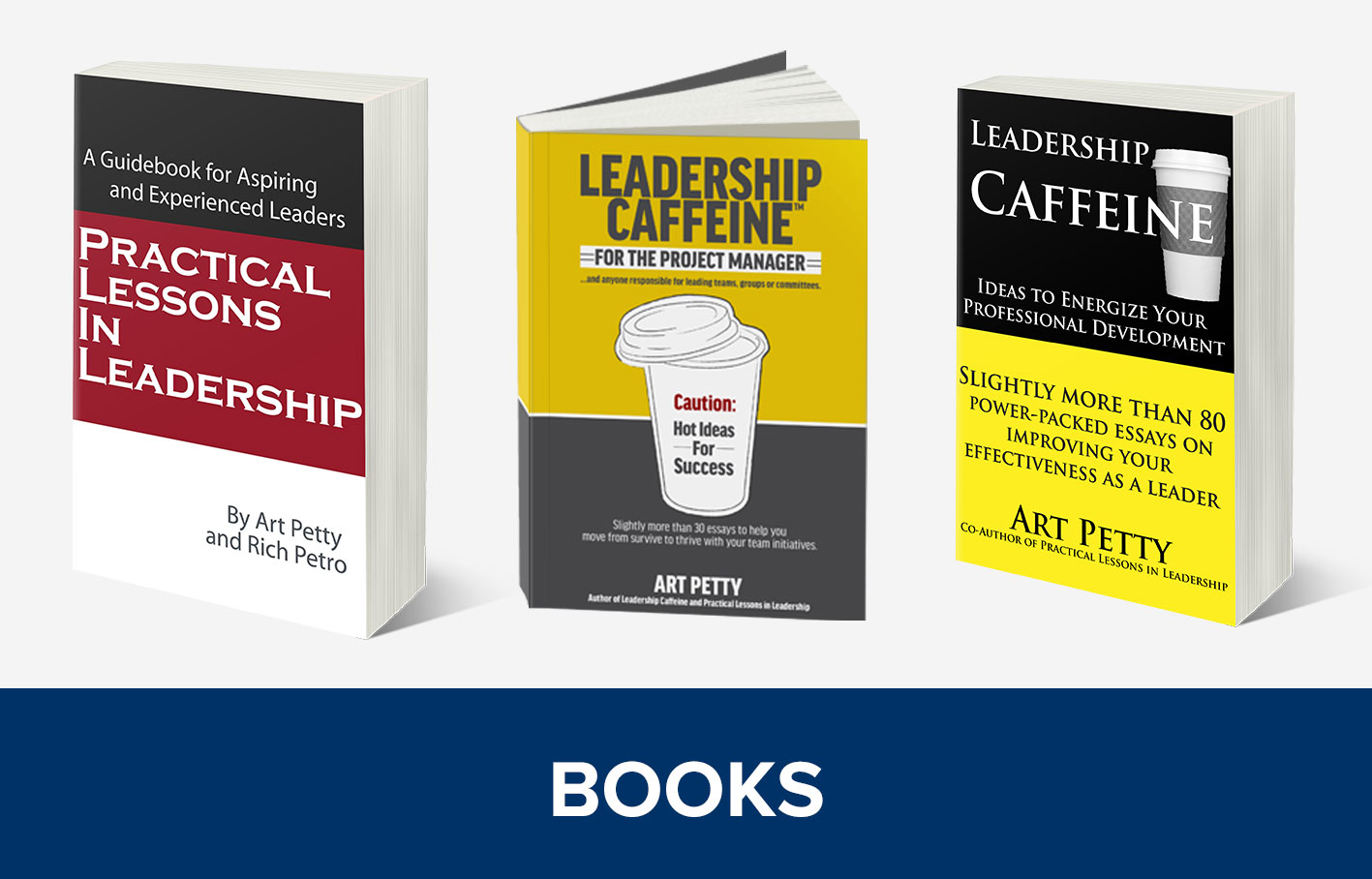
Art Petty is a Chicago-based management consultant focusing on strategy and leadership development. Art regularly speaks on innovation in management and leadership, and his work is reflected in two books, including the recent, Leadership Caffeine-Ideas to Energize Your Professional Development.  Art publishes regularly at The Management Excellence blog at http://artpetty.com

Prior to his solo career, Art spent 20+ years leading marketing sales and business units in systems and software organizations around the globe. You can follow Art on twitter: @artpetty and he can be reached via e-mail at art.petty@artpetty.com


The Millennial View: Fired for Facebook

Fired for Facebook, by Eric Rodriguez

Eric Rodriguez is the voice of The Millennial View here at Management Excellence. You can follow Eric on Twitter @mvieweric for more on the millennial perspective.

I like many other Millennials love social media. If I didn’t have a Facebook account, I wouldn’t be able to keep up with old friends, post pictures of a party, or find out if someone I met was single. Facebook is fun, but there are Millennials and many others that are oblivious that social media could cost them their career.

Dan Leone is the perfect example; he was a stadium operations manager for the Philadelphia Eagles, and in 2009 when he found out that his favorite Eagles’ player, Brian Dawkins, signed with the Denver Broncos he posted this on his Facebook page:

“Dan is [expletive] devastated about Dawkins signing with Denver … Dam Eagles R Retarted!!”

(By the way, the spelling errors are Leone’s not mine.)

The next day management found out about Dan’s comments and told him they were letting him go to “Denver or Oakland or maybe Pittsburgh.” But, they really didn’t care how he would get there because Dan was to be terminated immediately for his offensive remarks about the Eagles and people with mental disabilities.

Dan’s termination illustrates this decade’s newest form of corporate dismissals – Facebook firings.

There are people in my generation who think “What happens on Facebook stays on Facebook.” Someone actually told me this and I responded with, “It’s all fun and games – until someone gets fired.”

Every tweet, every picture, every webcast, could be saved, copied, or pasted away for further reference that can bury a career or reputation  – I’m thinking of you Charlie Sheen.

I’ve seen profiles with pictures that look like a Jersey Shore party, people who use language that makes them sound like Eric Cartman, and I’ll never forget when a past acquaintance sent me a friend request. Their photo was a mug shot.

(Editor’s note: If you don’t know who Eric Cartman is, you’re probably not a Millennial. I had to look him up. He’s a fictional character on the cartoon, South Park.)

I understand that many in our generation were teenagers when social media hit and many of us felt comfortable posting whatever, whenever we wanted because nobody thought that one day an employer or university we wanted to go to would look at our online profiles. We were so wrong, everyone looks at Facebook: admission counselors, employers, bosses, coworkers and my mom.

I predict that in this decade and beyond irresponsible use of social media will be the end of many careers, promotions, political aspirations, and marriages.

This may sound harsh, but it’s true, and it has happened.

That’s why posting dumb stuff on social media has become the equivalent of getting drunk at the office party, downloading illegal files on an office network, hitting on the boss’s daughter, or surfing for porn at work. No career professional in their right mind would do these things if they wanted to keep their career and project a positive image, so it irks me when I hear stories of people who could have avoided being fired if they would have used their brains when posting content on the web.

I’m a child of the digital age and an early adopter of social media and I use extreme prejudice in what I post and say when I’m using it. I love my Facebook and Twitter, but I also know that if it’s not carefully used it could be a liability that affects my personal and economic well-being.

I hope the majority of Millennials and other social media users recognize that responsible use of social media can mean the difference between a great career and a bad one. Use your social media wisely and you’ll be rewarded, but make a mistake and you’ll make life difficult for yourself and your professional future.

The Anachronistic and Oxymoronic Tyranny of Marketing Control

ControlThe new world of marketing frightens many experienced marketing professionals.

For those accustomed to believing that they have some form of inalienable right to control everything that is said or published about their firm in the name of “managing the brand,” these are difficult times, indeed.

As individuals and groups inside organizations seek to tap into the many remarkable and generally free tools to connect, engage and converse with their audiences, old-line marketing managers increasingly lash out and assert their power in the name of the brand.

Someone forgot to share the memo that everything changed. (Does anyone send memos anymore?)

The Experienced Marketing Manager’s Last Grip on the Old World:

  • “How will I protect the brand?”
  • “How do I ensure that people don’t say the wrong things?”
  • “How do I ensure message consistency?”
  • “How do I ensure that people perceive us as in our true light…the way I open every press release? You know…it goes something like,  “Acme, a market leader in…”

4 Marketing Management Practices that Stifle and Smother:

1. Social media policies that reflect the tone: “this stuff is dangerous and we’re going to control what you do.”

2. Arcane and insane approval processes that require marketing to approve everything that is communicated externally. (Aaaargggghhhh!)

3. An attitude of, “I own the brand.” Bull.  Your customers own your brand…your institution decides how it is perceived through transactions and experiences.

4. A reliance on old-line interruption-focused marketing tactics, where you choose the time and place to attempt to engage your audience.

The New Tasks of Today’s Marketing Manager:

  • You should work tirelessly to ensure that you have a well-defined positioning and messaging strategy that means something to the people that count.  Emphasis on the last few words of that sentence.
  • You should work hard to engage your employees and colleagues in understanding and spreading this message.
  • You should absolutely monitor customer and marketplace response to your message and your value proposition, and you should keep it fresh and relevant.
  • You should focus on providing every way possible for your people to build value, create visibility, make connections and to monitor and engage in discussions about what’s important to your business and to your customers.  Teach your people about the new tools of marketing and encourage experimentation and learning.

Oh, and I have no qualms about you ensuring that pages and blogs and profiles incorporate your well-honed messaging and your logo standards.  And of course, people need to conduct themselves as professionals and have the modicum of common sense that it requires not to divulge inappropriate information.

After that, get over it.

It’s this last point that frightens the marketing control types.

The Bottom-Line for Now:

Marketing has always been too important to be left to the marketing department.  It’s an institution wide activity that support’s Peter Drucker’s purpose of an enterprise: “To acquire and keep customers.”  Marketing manager, sorry, but you don’t own marketing.  You are the proprietor of a set of activities and you are an enabler of marketing processes, but you most definitely don’t own marketing.

While there are perils and potential time-wasters in this new world of communication and connection sufficient to merit some amount of worrying, the best solution is to shift your attitude from “How can this stuff hurt us and what do I have to prevent?” to “How can this stuff help us and what do I have to train/educate/enable?”

You cannot control your way through a world where everyone else is talking to everyone else.  Somewhere out there, a group of people that you care about is exchanging ideas on things that they care about.

Are your people listening and engaging?  Or, are they still waiting for you to decide that it’s safe to open the gates of your marketing fortress?

Mind Your Knowledge Gap: Why Social Media is Essential to Your Career

This is a wake-up call to my mid to late 30 to 40 something (and older) contemporaries.  It’s time to figure out what all the noise is about social media and how to leverage it for yourself, your career and your organization.

It’s not going away.  It may change and morph, but there’s a whole new world of conversations and interactions going on and if you are not plugged in, you are tuned out and wandering aimlessly.

Do You Tweet?

If I had $100 for every conversation that included something like (with a tone of disdain), “Twitter sounds ridiculous.  Why do I want to know that someone is taking a shower or what they ate for breakfast,” I would be well on my way to recovering a few losses in my 401K. 

I’m two months new to Twitter and amazed at the quality of the conversations and the number of great professionals that I’ve met.  I’m also flabbergasted to think about the conversations, resources and talented professionals that I was missing out on prior to joining. 

Are You LinkedIn?

Or another exchange that I had with a brilliant and talented and dear friend the other day, “I only signed up for LinkedIn because I was looking for someone.  I hope this isn’t a mistake.” 

Sigh. Instead of a mistake, in the right hands, this is a remarkably powerful research tool and the most efficient way to-date to connect with and maintain a dialogue with former and current colleagues.  The only mistake is not to take advantage of it.

Thought About Marketing Lately?

I chat with many experienced marketing professionals that still view their jobs and their profession through the eyes of individuals that grew up and never left the teaching and prevailing wisdom of the 80’s. 

Meanwhile, Seth Godin (Tribes) and Guy Kawaskai (Reality Check) and David Meerman Scott (World Wide Rave) and others are serving up powerful arguments that the processes of reaching people, building visibility, building brands and establishing credibility are all different.   

The Younger Generation, Blogging and On-Line Learning:

As the MySpace/Facebook generation asserts itself in the workforce (see my post: In Hopeful Praise of the Millennials), the relevance of old approaches of working, leading and promoting will fade into history. 

In my own case, a mere two years ago, I wasn’t certain about blogging and the prospective value from the time it would take in my daily schedule.  Now, I’m a raving advocate for the medium as a means of establishing a dialogue with sharp people and for building your brand. The time commitment is down to less than one hour several times per week.  I’m also curious about what’s next.

I am an education junkie (and passionate about great universities and great educators) and love the chance to bring a heavy dose of pragmatism into my MBA classrooms.  I  was slightly cynical about the potential of on-line education and wondered what all of the noise was about. In following the old adage, “if you want to learn something, sign up to teach it,” I did.  Three times. 

Once you rethink and acclimate to the communication dynamics, the potential to integrate on-line and live education is remarkable.  In my hybrid class (one week face to face the next on-line) in Project Management this past winter, the on-line portion provided the ability to research and share perspectives much broader and deeper than any I’ve ever witnessed in a straight classroom setting.

The Bottom-Line For Now:

I’ll be back on this topic sometime soon. 

My advice to you or for your doubting colleagues is to show them the networking and research power of social media.  Highlight examples of brand-building and thought leadership development that cost nothing but time.  Showcase the savings from eliminating many interruption-marketing techniques in favor of the new approaches.  Invite them to Twitter and show them how to filter out the noise and focus on connecting with the many, many sharp people.

There are no silver bullets in life or business, but there are sure-fire ways to fail.  One of the best is to start acting like some of our parents and avoid what we don’t understand.  

Hey, by the way, join me on Twitter or connect with me on LinkedIn.  The conversations are great. 

Now, if I could just figure out what all of the fuss is about Facebook.  I just don’t get it…