Have You Been Observed Recently?

For a whole bunch of reasons, I really enjoyed the latest column by Dan and Chip Heath at Fast Company, entitled, “Watch the Game Film.”

Professional sports teams and great athletes have long understood the power of watching game film to learn about themselves as well as the strategies and tendencies of their opponents.  Aside from professional speakers, few of us in business benefit from either viewing ourselves in action on film, and sadly too few of us benefit from good feedback and mentoring from our managers and colleagues.   An exception to my “too few” lament is found in the emphasis that great front-line sales managers place on observing and then coaching their reps.  Of course, great front-line sales managers IMO are the exception and not the rule.

The Heaths offer some fascinating examples of the power and tangible impact on performance of third-party observation in business and education settings (well worth the time to read), and then cap things off with the thought-provoking question:

What insights might your team be overlooking because no one is observing carefully enough?

Wouldn’t You Like to Know?

  • What impact you really have on people as you engage with them?
  • What habits you have that detract from your effectiveness as a communicator?
  • What you need to dial up to encourage people to know, like and trust you?
  • What your top (performers, reps, project managers, product managers team leaders) do to engender trust and create positive results?
  • What you can do to help everyone on your team recognize what they need to do to improve?

The Bottom-Line for Now:

The power of observing is under-emphasized and critically important in business.

Much like professional athletes, we need to see ourselves in action to understand our own quirks, tells and idiosyncrasies.  When it comes to dealing with people, engendering trust and earning respect, we’re often our own worst enemies.  It’s long overdue for us to spend some quality time studying game film or listening to someone that has observed us in action.  We all might be surprised at how easy it is to identify and make meaningful improvements in our lives, careers and organizations.

Check out the Leadership Tip of the Day at Building Better Leaders

Leadership Caffeine: Things I Wish Someone Would Have Told Me When I First Became a Leader

Note from Art: this one’s with a little help from my friends.  I’ve been working a great deal with first-time leaders recently (my favorite groups!) and I posted a tweet to the extremely talented group of great people that I follow on Twitter asking what they wish someone would have told them when they started out in their leadership careers. Here are a few of their insightful thoughts with attribution, commingled with thoughts of my own.

Things I Wish Someone Would Have Told Me When I Became a Leader

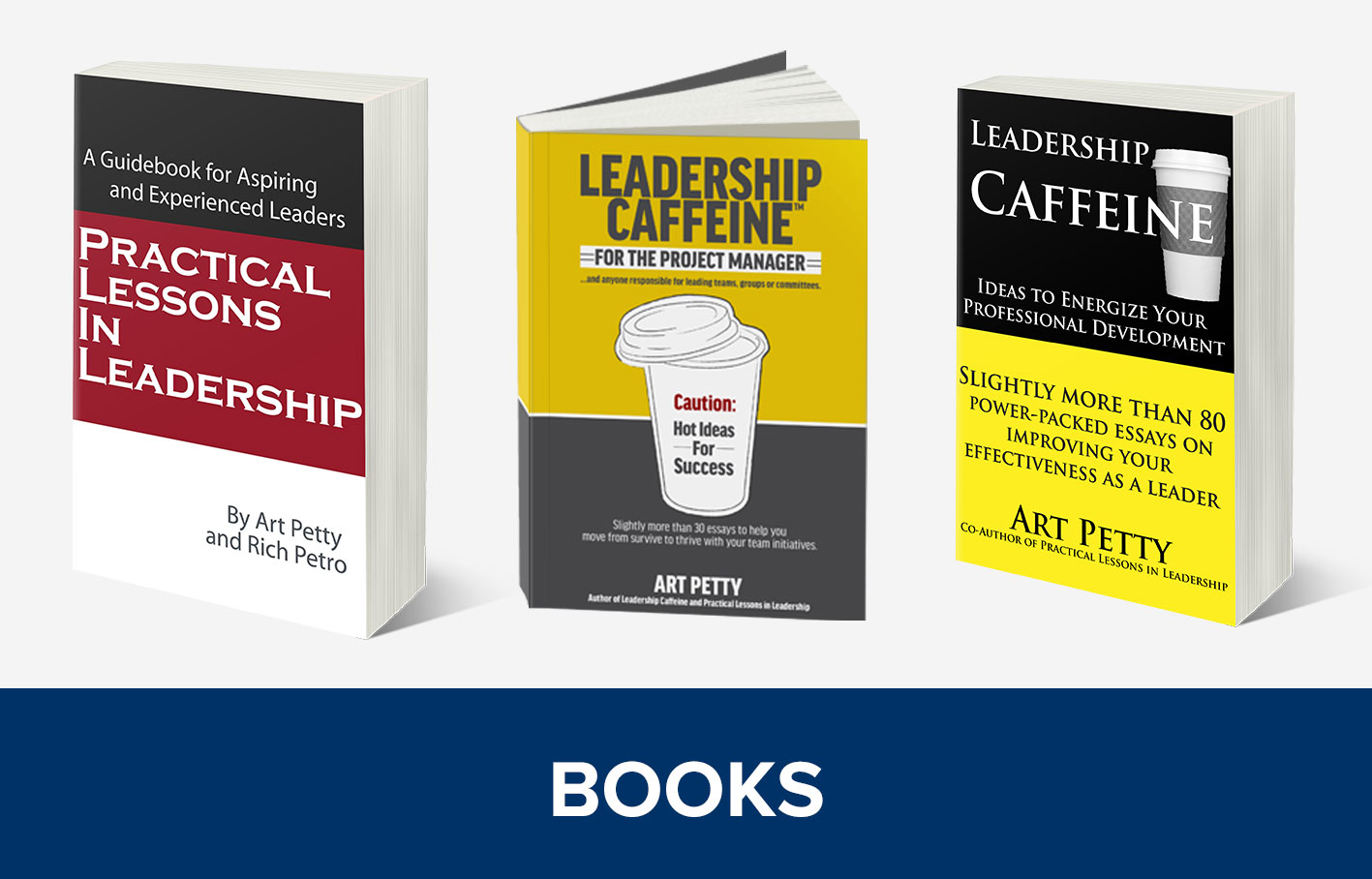
One of the motivations in writing Practical Lessons in Leadership a couple of years ago was to take a stab at leaving behind that letter we all wish we would have received when we first became leaders.  You know the letter…it’s the one that if we had read it and actually followed the advice, we might have short-circuited a few years of learning things the hard way.

The short-story on what my letter to early career leaders includes:

  • Not everyone should lead. It’s OK to be an individual contributor, although you will still need to develop and draw on your leadership skills to succeed.
  • You need to realize sooner than later that your role as a leader is about creating the environment and providing the support for others to do great things and prosper.
  • Leading is hard work. As one wise man indicated, it’s a profession, with a body of knowledge waiting to be discovered.
  • Credibility is your most valuable currency as a professional and a leader. Everything you do must reinforce your credibility.
  • Treat everyone with respect. All of the time. No exceptions.
  • Leading is all about everyone but you. Get over yourself.
  • You’ll spend too much time with the wrong people. Focus on the people that want to grow, develop and succeed.
  • The highest respect you can pay someone is to truly pay attention by supporting their development.

And from some of my colleagues on Twitter

-From: @GinaAbudi on influence and communication:

“Even as a leader you STILL must be able to influence others effectively.”

On communication: (paraphrased): Keep your communication open.

-From @DavidWLocke on the power of a thank you

“Years ago, I almost fell over when an engineer thanked me for working on his project.”

-From @wallybock:

“I wish I knew the importance of role models and mentors.”

“People in my classes talk about skills they wish they had or knew to get training in. The most desired skill clusters were (in order) talking to team members about performance/behavior and dealing with the boss.”

-From @mjasmus

“I wish I knew that the people part of leading would be the most complex, messy and difficult.”

I wish I knew that leading isn’t about the push. It’s more about the pull.”

-From @rseres

“Leadership is not about control.”

“As a leader, you don’t have to have all the answers.”

-From @SherpaDe

“Good listening is a skill to be taken seriously.”

“Learn to ask great questions and stay curious.”

Some smart, experienced people with great advice for early career leaders!  Thanks to all.

The Bottom Line

If you are an experienced leader with responsibility for supporting the development of leaders around you, remember to pay forward the lessons that you’ve learned over time and frequently learned the hard way.

While we will all have our own unique leadership experiences, we owe it to the next generation to do everything in our power to help them along. Never mind that no one was there to help you. You’ve learned that you are better than that.

And for those of you embarking on your leadership careers, read, listen and learn. Oh, and while you are at it, heed Wally’s advice and seek a role model or mentor. There are more than a few experienced leaders out there happy to help you along your journey.

Leadership Caffeine for the New Week: Are You Mentor Potential?

It’s a stormy spring morning here in the greater Chicago-area and I confess to brewing my second pot of a dark Guatemalan roast to help spur some energy.

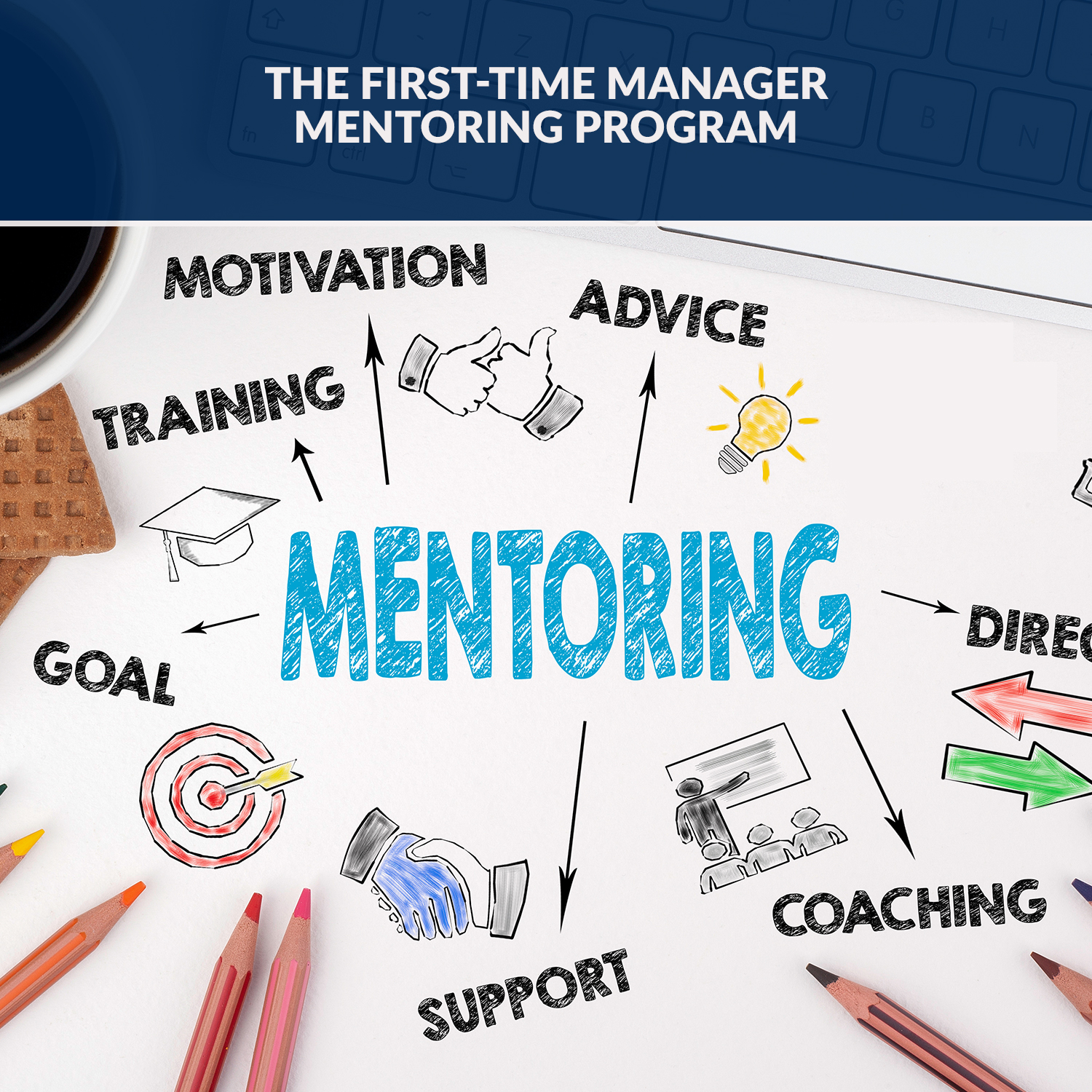
This week’s topic focuses on the plight of the first time leader and a call to action for experienced leaders everywhere to step up and do a better job mentoring and coaching.

For the past three years, I’ve been formally and informally polling leaders at all levels and in all industries on their first-time leadership experiences.  The feedback is frightening.

  • A majority of individuals indicate that they became a leader for the first time by accident not by design.  There was a gap, someone left and the manager at the time made a battlefield promotion.
  • A majority of the individuals that I’ve spoken with indicate that as a first-time leader they received little support or mentoring from their immediate manager.  Many indicated that their best support and source of feedback came from a peer or another manager, but not from the person that they directly reported to. 
  • A surprising number of those that lived through this ad hoc promotion to leadership report engaging in the same practices of promoting upon need and leaving people to sink or swim.  While no one comes out and says this directly, I get the impression that it is almost a rite of passage. “Hey, no one helped me out and I did OK.”

With practices like those described above, it’s no surprise that a fair number of first-time leaders fail and end up leaving their organizations.  Imagine the collateral damage that they create in the process of failing. 

As my teenager might say, “This is messed up.”

Take Initiative-Don’t Wait for Senior Management to Figure this Out:

Instead of the traditional path of attack that I take on this issue—start at the top, convince management that creating a culture of leadership development will pay dividends for years to come etc., my suggestion is for those of us that have gained some experience in this experience-driven profession make the time to help out an early career leader.

While we’re all waiting for the message to sink in with top management, there are ample opportunities to make a difference now.

Become a mentor.  Some suggestions and feel free to add your own:

  • If there are new leaders on your own team, focus here first.  Break the “sink or swim” cycle on your own team and focus on engaging with, observing and providing feedback to these first time leaders.
  • Depending upon your organization’s dynamics, approach HR and ask for their help  If you are working around an old-school HR function, you might get shot done, but I’m willing to bet that in the majority of the cases, you will find someone that would love to support this idea and even get involved.
  • Some inexpensive but effective programs for first time leaders can include Book Clubs, moderated round tables and other forms of peer networking.  If you/HR are taking a semi-formal role in the process, provide support for improvement ideas and suggestions emanating from the first-time leaders.
  • If HR is not much help, talk with your peers and see if they are open to the idea of an informal mentoring program.  Identify those in need and assign them to someone other than their manager to gain a slightly more objective view and level of support.

After a period of time, the individuals that once were first-timers become experienced.   Introduce them into the mentoring process by having them take leadership roles in the various programs.  Instead of perpetuating “sink or swim,” you perpetuate good practices in developing others.

The Bottom-Line for Now:

More often than not, we have the power and ability to solve many of the problems that we complain about.  It’s time to step-up, reconfigure your calendar just a bit and put some effort forth in developing the next generation of leaders in your workplace. 

If you don’t, chances are no one will.  Start a mentoring revolution today!  

Leadership Development: “This is Squishy Feely” Stuff

October 8, 2008 by Art Petty · 2 Comments
Filed under: Leadership, Leadership Skills, Leading Change 

The “Squishy Feely” statement was on a recent comment card for a workshop that I conducted.  The follow on note to that very technical phrase was, “We’re not going to do this.”

The “stuff” and the “this” that this individual was referencing included things like:

  • Providing growth opportunities for the firm’s associates by structuring assignments for developmental purposes.
  • Working to identify the firm’s high potential talent and ensure that these individuals are gaining the experience and exposure that they need to develop into leaders in the near future.
  • Increasing mentoring, coaching and improving feedback practices.  A survey of the firm’s associates indicated that this is generally absent from the environment.
  • Involving people outside of the senior staff in providing input for strategy assessment and formulation.  It is presently a closed-door process.
  • Taking time as a senior team to identify the attributes of future leaders and to begin forming a practical leadership competency model.

And a few other “Squishy Feely” things like the above.

It’s not uncommon to run into resistance from the senior members of an organization that has just recognized that it might be good to professionalize and improve talent development and acquisition processes. I can even understand the “Squishy Feely” comment coming from a grizzled functional veteran that grew up in a world where the topic of talent identification, development and retention was not as front and center as it increasingly is today.  However the statement: “We’re not going to do this,” is impossible to fathom. It’s a lot like saying, “It’s good to be ignorant.”  Or, “It’s OK not to breathe.”

Without launching into a diatribe on the need for organizations to become great at identifying, developing and retaining talent (I’ve co-authored a book and composed about 130 blog posts on this topic), I will instead encourage the professional dealing with the subject of leadership development to recognize the reality of the resistance that they face.    Ignorance and apathy are powerful adversaries and their cousin, fear of change, is perhaps even stronger.

If you are leading or involved in driving the topic of leadership/talent development in your organization or with your team, it pays to understand what you are up against and to steel yourself for the resistance.  If you are doing this at the senior level, expect a marathon, not a sprint and take heart in the small, incremental victories.

My post of a few months ago, Teaching a Senior Leadership Team to Dance with Leadership Development, includes what I believe are some useful tips for anyone involved with this issue at the top levels.  In it, I propose 8 Steps to Mastering the Leadership Development Dance, and frankly, upon further review and after considering the “Squishy Feely” comment, I stand behind the steps.  I am hopeful that they also have something for the mid-level manager seeking to strengthen practices at his or her level as well.)

The Bottom-Line for Now:

I can’t imagine not doing everything possible to arm myself and my company with the best possible talent at every level of the organization.  The day that the “We’re not going to do this” types retire or are otherwise invited to do something else is a victory for the rest of the organization.  Some will see the light…others will go on happy in their ignorance and narrowly focused on their minute to minute mission.  If you are about creating the future, don’t let the resisters slow you down.

How Healthy is Your Leadership Culture? Rate It Yourself and See or, “Rate it and Weep”

Chances are if you are like most of the business professionals that take the 10 question Leadership Culture Index below, your organization can use some improvement.  A lot of improvement.

I deliver this simple and I’m sure non-scientific survey (see author’s note for origin) almost every time I’m in front of a group of managers and executives talking about leadership, and I’m still shocked by the scores.  I suppose I should quit being shocked by how abysmal many businesses are at identifying, developing and retaining leadership talent, but the optimist in me continues to believe that people are too smart to ignore this important issue.

Read more

  • Art Petty

    Art Petty Welcome to Management Excellence where the focus is on building better leaders and creating high performance organizations.

  • Building Better Leaders

    Building Better Leaders - Move Your Career Forward

    Art Petty's Building Better Leaders programs in Leadership, Management and Developing as a Senior Contributor offer powerful and practical guidance for motivated professionals.

    All programs available on-site in group format and select programs available in a distance learning PLUS personalized mentoring format.

    Visit Building Better Leaders to find a program to help you or your team move forward.  And don't forget to subscribe to the Building Better Leaders Leadership Tip of the Day.

  • Management Excellence Tools

    Download the Management Excellence Guide to Effective Trade Show Marketing.


    What's Your Strategy & Execution (STREX) Quotient? Download and use the survey to help you gauge your organization's Strategy & Execution effectiveness and identify areas for improvement.


    e-book-Leadership and the Project Manager - Developing the Skills that Fuel High Performance Download the pdf or go to the e-book pages on this site and contribute to the conversation

Blog Subscriptions

Email:

RSS Feed Subscribe to Management Excellence

Connect With Me On

View Art Petty's profile on LinkedIn
Art Petty on Twitter

E-Newsletter Mailing List

Join my e-newsletter mailing list and receive the latest in best-practices content for leadership, sales & marketing and strategy.
E-mail:  
Privacy by SafeSubscribe

Alltop