Back to School!

We delivered our oldest son to college on Friday and our high school senior survived (barely) the annual “first day of school picture” in our backyard this morning.  I am busy preparing class  materials for my Fall MBA courses and it feels like summer is officially over regardless of what the meteorological calendar says.

I love “Back to School” time every year.  There’s a palpable level of excitement in the air tinged with just a bit of sadness about the end of vacations, beach reading and weekend barbecues.  It’s also a time where education is (or should be) the focal point in many households as students and parents get ready for homework, tests and projects.  And while we all know that education and learning have no season, our reliance in the U.S. Midwest on an arcane but not unpleasant long summer break (versus year-around school interspersed with shorter breaks in many other regions), makes the return to school all the more dramatic. 

One of the things we often lose as busy working adults is that sense of excitement about learning.  It’s easy to let years and even decades slip by and focus on everything but our own self-development.  Sure, we attend mandated training in our company and possibly even the periodic seminar to earn the Continuing Education Units (CEUs) mandated by our professional certifying organizations.  Unfortunately, neither of those formats creates the exhilarating sense of learning and discovery that we may have had at some time earlier in our lives, but lost along the way to becoming responsible adults.

As a hiring manager for many years and now as a leadership development trainer and consultant, I’ve talked with hundreds of people about their continuing education, and I am always surprised when people struggle to describe anything substantive in this area.  Somewhere earlier in my school career, I remember an educator banging the drum repeatedly that “learning is a life-long process,” and I believed him. 

It’s my observation that the most capable and most successful individuals are constantly seeking knowledge, relentlessly working to expand their skills and often driven by some inner-sense of the need to learn through exposure to new ideas.  If you fit this description, quit reading and get back to what you were doing.  If you have to go back decades to recall the last course you took or the last time you read a book that wasn’t on the fiction best-seller list (nothing wrong with fiction best sellers, but diversity is good), here’s a list of activities to help you rekindle your love of learning and your pursuit of knowledge:

  • Join a local book club (contact your library for ideas) and gain from the perspectives of others and the rigor of having to stay on task with your reading assignments.
  • Start and lead a book club at your place of work—you might even get the company to pay for the books!
  • Spend some time researching the state of the art in education and certifications for your profession.  If you end up feeling hopelessly outdated, it’s time to take the next step and choose a workshop, a certification program or even another degree program.
  • If you hate the idea of physically attending class, investigate on-line opportunities.  The number of programs delivered on-line is growing daily and the flexibility is great for busy people.
  • Consider a program outside your core field of expertise.  In the Chicago-area, Northwestern, University of Chicago and DePaul all have some remarkable humanities and literature programs that are designed for and filled with doctors, lawyers, teachers and professionals from every other possible vocation.  If you don’t want the rigor of a degree investigate certificate options or possibly even just auditing a course.  Individuals that I know that have gone through these courses credit them for helping open their eyes to a whole world of ideas that they didn’t know existed.
  • More reading.  Put down the trade journals for a while and pursue something in the history or biography sections.  It’s remarkable what we learn from studying what others have already gone through.
  • Executive Education can be exhilarating.  I go to Kellogg to recharge and I always leave a program with ideas to help improve my performance and my business.  Exec Ed is big business and big $, but many companies support the initiative.
  • Take advantage of tuition reimbursement dollars from your company.  Most organizations never spend what they’ve budgeted in this area.  You can help solve this problem.
  • Seek out a mentor.  Depending upon where you are at in your career, this can be an enlightening experience. If you are beyond the “seeking” phase, consider becoming a mentor.
  • Teach a class.  A wise person indicated that if you want to learn about something, sign up to teach a class about it. 
  • Volunteer to lead an initiative in the community.  Some of the best leaders and project managers that I know are found on the teams and programs in schools and churches.

The Bottom-Line for Now:

The brain is a lot like the body…use it and it stays fit and ready for action.  Allow it to atrophy and everything becomes a struggle.  You have a remarkable capacity to learn.  Whether you use it or not is up to you. 

The concept of the Learning Organization is well established and widely acknowledged as a requirement for realizing and sustaining success.  Senge described the need to not only create organizations that learn and adapt, but to realize those that become generative and to create their own futures.  Your ability to consistently add value to your organization is in large part related to your active pursuit of new ideas and new ways of looking at the world. 

What’s on your mind today?

Want to Kill a Few Brain Cells, (Try and) Read a Management Textbook

(Author's note: this post is filled with hasty generalizations and probably a few miscarriages of justice and judgment.  If you are in academia, read it at your own peril.)

I suspect that I might raise the ire of a few publishers and professors with this one, but oh well, life is short and some things just need to be said.  Of the many things that I am involved in, one of the newest and most enjoyable is teaching at the graduate and undergraduate levels.  This has been a long-time goal of mine driven in large part by a number of great experiences and great instructors earlier in life.  You know the type of instructor that I'm talking about.  The ones we all remember are the educators that both created and satisfied intellectual curiosity, entertained and ultimately left an impression on us. 

And while I'm loving the experience, I can't help but observe that the textbooks are some of the most mind-numbing, coma-inducing products ever to emerge from Gutenberg's great creation.  In particular, the Management text in my Fundamentals of Management course this Spring is almost certain to drive the most interested of business majors to consider something more exciting like accounting or neurophysiology.   What a shame to take a noble and exciting and complicated topic like management and wrap a bunch of dead theories in-between some interesting case studies and let that suffice for something that is supposed to teach the fundamentals of management.  (Author's note: I didn't pick the text…it was pre-picked. I won't make that mistake again.)

I confess to being a bit over the top about business education.  I've spent a decade attending programs at Kellogg and I've never left a day long, week-long or year-long program without being filled with ideas, excitement and new found energy for the challenges ahead. (And now that I am teaching at several institutions, I aspire to have that impact on the participants in my classes.) I must have missed the memo that said that it is OK to inspire executives, but for undergraduates, we've got to test them by subjecting them to content that is almost certainly non-essential for success and most definitely, boring.

OK, in fairness to this unnamed textbook, words like strategy, management, market forces, Porter's Forces, leadership, innovation, information technology and many others that you would recognize as belonging to the field of management do appear.  However, it's downhill from there. 

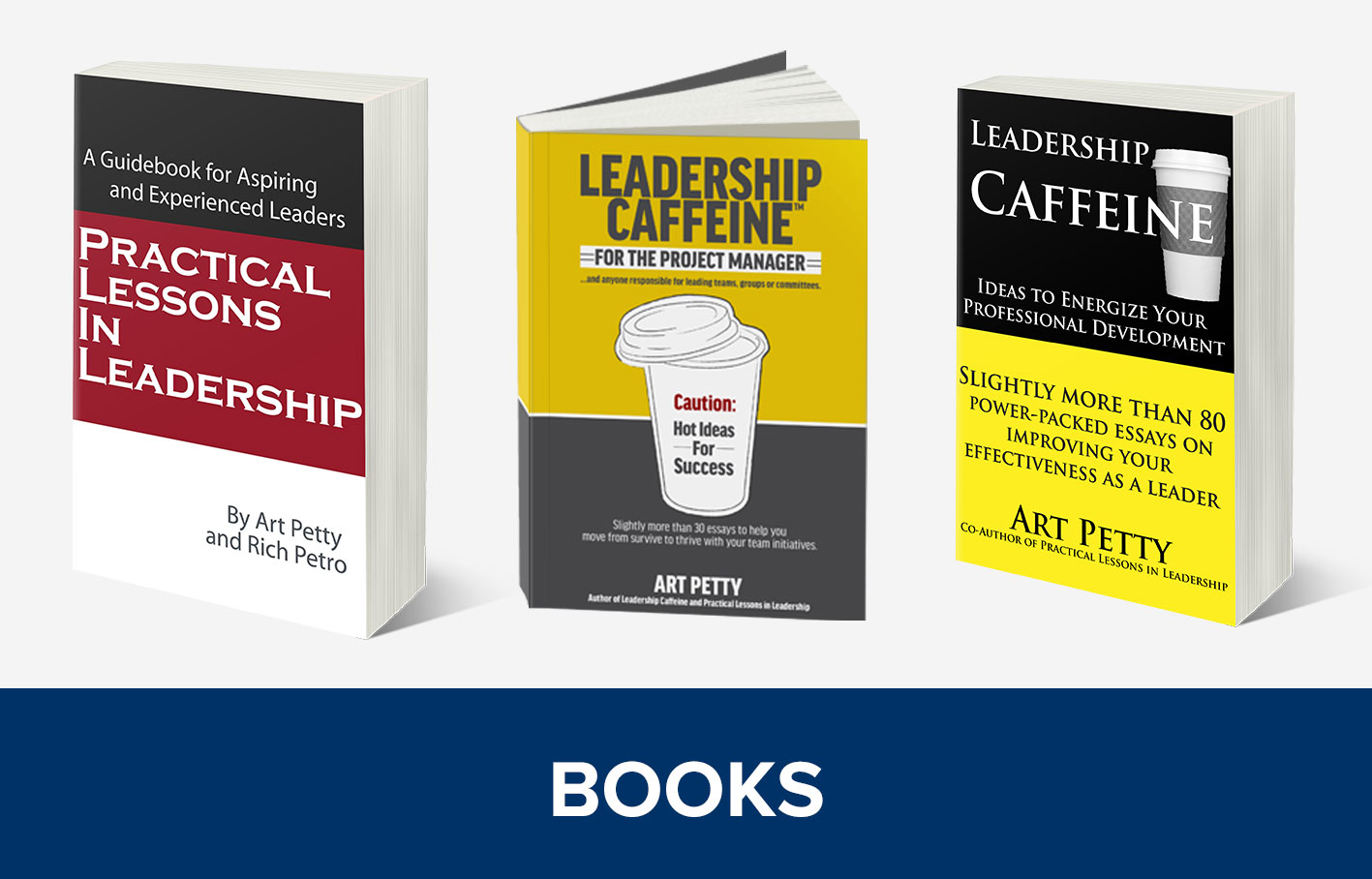
I suppose the best cure is for me to write myself and I may.  I already co-wrote a leadership book that I now look at in a new light after struggling through the text's painful treatment of one of my favorite topics.  I'll stop my ranting now and offer a few suggestions for anyone considering writing about or teaching management to the future managers of the World. 

My suggestions for the ultimate management textbook (versus the one I had to teach from):

  • Please skip the history of management theory development or at least condense it down to an interesting few pages. This is a great topic, and likely very important at a more advanced level, but not critical as an initial exposure to management.
  • I do want to provide students with some context for the evolution of business and business models and how organizations and leaders have changed over time based on advances in technology and changes in society.  Good stuff and important context.
  • Leadership…keep it practical and make certain that we do much more to highlight that leadership is a profession and a very complex, challenging and rewarding one at that.  You can skip the nonsensical debate and endless pages about the mind of a manager versus the mind of a leader.  They are one and the same person…dealing with different topics from tactics and operations to strategy and motivation.
  • Speaking of strategy, please portray this powerful tool of leadership and engine for value creation as a dynamic process that involves an entire organization versus something that consists of SWOT and Porter's Forces analyses.  And don't forget execution.
  • The section on HR reads like something developed by the Politically Correct Committee.  Please.  HR's role as a critical enabler of strategy through talent and systems and tools is much more exciting than whole sections on diversity and harassment.
  • Hmmm, Information Technology as a subset of some other chapter is not going to cut it.  Again, we are talking about a critical enabler of strategy and a complex and constantly changing arena.

And so on…

The Bottom-Line for Now:

I'll stop here with a comment that now that I've thought about it, I don't know why a text is needed at all.  Staff the program with experienced business professionals and infuse the curriculum with readings and concepts from Welch, Charan, Maxwell, Day, Drucker, Collins, Churchill, Lincoln and Franklin and most issues of Harvard Business Review and call it The Joy of Management.  Hmmm, it just might work.  Remember, you heard it here first.