Two Voices-Humility and the Effective Leader

Note stepsfrom Art: One of the true joys of my blogging experience comes from meeting and collaborating with some remarkable people.  Mary Jo Asmus is one of those remarkable people.  She writes an outstanding leadership blog offering powerful and relationship-focused perspectives on all things leadership.  I don’t miss a post of hers and encourage you to check out her site and make certain to subscribe.  We collaborated a few months ago for Two Voices on: The Words of a Leader, and enjoyed the experience and the reactions so much that we vowed to do it again.

Well, we’re back.  Mary Jo reached out to me a few weeks ago and raised the topic of “Humility and the Leader,” and we were both so interested in exploring this issue that we went off to our separate corners and the output is reflected in the two posts below.  While the posts don’t necessarily reflect a point-counterpoint perspective, they do bring two unique perspectives to what turned out to be a challenging issue.  My gut indicates that we might even elicit some interesting feedback from the many thoughtful readers that frequent our respective blogs.

OK, enough of my blathering and time to get to the posts. Thanks, Mary Jo for your inspiration!

Humility and the Effective Leader-Mary Jo’s Thoughts

So often, when we think of leadership, we think in terms of the charismatic leader, or the bold leader. We think of leaders as bigger than life, exuding confidence and perhaps, arrogance.

For most, “humility” isn’t a word that comes to mind when considering the leaders we think we know. This is unfortunate, because the best leaders I know have been able to stay self confident without crossing the line into arrogance through the simple act of remaining humble. It isn’t easy, especially for leaders who’ve had big success.

When we are humble, we understand and invite the gifts that others bring to our effective leadership.

When we are humble, we invite participation by others.

When we are humble, we are open to new learning.

When we are humble, we have empathy and compassion.

Arrogance breeds behavior that isn’t inclusive, diverse of thought, creative, or enlightening. We know that we are not humble when we’ve become arrogant.

How do we know when we’ve crossed the line into arrogance?

Be vigilant. Listen to yourself. You’ve crossed the line into arrogance when:

  • You take all the credit: real leaders know that their success is a group effort. When we are humble, credit goes to all who share in your success.
  • You are the smartest person in the room: learning has ceased. You feel as if you have nothing new to learn from those around you. When we are humble, we are in a state of inquiry; not knowing all the answers, which allows us to continually learn.
  • You judge those around you as “less” than yourself: you’ve put yourself on a pedestal. Nobody can do anything better than you can. It’s not important where you are in relation to everyone else. What is important is that we push our own edges outward to continually evolve.
  • You’ve lost empathy and compassion: you just can’t seem to identify with those in a tough spot or feel sympathy for those in sorrow. When we are humble, we can walk in the shoes of others and we can reach out to them.

Are you staying humble, or have you crossed the line into arrogance? Spend some time thinking about this question and asking for feedback from those you trust on what they are observing in your behavior. And if you’ve crossed the line, call your executive coach to help you get back to humility.

Humility and the Effective Leader-Art’s Thoughts

I concede the dictionary war to all of you that will turn to the word “humility” and see a definition that says, “a modest or low view of one’s own importance; humbleness,” or, something as profound as “the quality or state of being humble.”

These are not definitions and words that you tend to associate with successful leaders, and yet, I cannot help but observe that many of the most impactful and successful individuals that I’ve worked with and around have an element of humility in their demeanor and an approach that exudes a quiet but positive self-confidence.

Is humility one of the secret ingredients of successful leaders?

To me, humility in a leader is best described as having the self-confidence borne of experience to be comfortable in your own leadership skin, without having to project to the world that you’re on top and in charge.

To be humble as a leader does not mean that you are weak, but rather that you are thoughtful, considerate and confident in the people around you and their ability to solve problems and learn and solve more problems.

It takes time and experience and self-awareness and raw courage to develop and project humility and confidence at the same time.  Both are essential.

We generally don’t come into the leadership world with a sense of humility.  Many of the mistakes of early leaders stem from a misguided belief that To Assert = To Lead.

Unfortunately, many carry this belief in assertion equals leadership with them as they climb the ladder.  The earlier over-stated and over-projected self-confidence often evolves into arrogance and then hubris. The collateral damage from the leaders that follow this evolutionary path is huge.

The path towards confident humility is considerably more difficult and is filled with its own opportunities for derailment. Those that act humble may be misperceived as weak or uncertain.  The To Assert =To Lead crowd likes to hire their own kind in some form of twisted Darwinian practice that ensures the survival of their kind, fully understanding that they may very well be hiring the individual that steps on their back in the climb up the ladder.

Alternatively, I submit that humble leaders are never weak.  Like some martial arts experts, they have the skills to strike and defeat, but choose to use them only to defend or to fight for what is right.  Fighting or striking out is the last resort of the incompetent who lack the wisdom and intellectual tools and substance to fight fair over concepts and ideas.  One of the strengths of the humble leader is that everyone knows that he or she is capable of fighting and winning. This “walk softly and carry a big stick” approach buys the ability for the leader to cultivate his or her humility.

Like so many difficult tasks in life, there is no magic pill or simple guidance that anyone can offer on becoming an effective leader.  You learn by doing and YOU choose your own style.  I regard leadership both as a profession and as a journey and I encourage people that when they come to the fork in the road on choosing a leadership style, to turn away from the To Assert = To Lead path and start down the more difficult road and spiritual journey that focuses on others over self.   I also encourage them to keep their eyes wide open and carry a big stick.

The Bottom Line:

Never underestimate the ability of the quietly confident and slightly humble leader to inspire others to move mountains.

Guest Post-More Leadership Lessons Learned the Wrong Way

Fresh ideas sign in the skyNote from Art: It’s always fun when a post strikes a chord and compels someone to comment or even put hands to keyboard and crank out a guest post.  Last week’s Leadership Lessons Learned In a Crane and Sitting on a 5 Gallon Pail” drew upon some of my own early career memories and the formative lessons learned the hard way and served as inspiration for some interesting comments and today’s guest post.

Joe Zurawski is back with us today serving up a nice post on one of the early career experiences that shaped his own leadership development. You may recall that Joe joined us here a few months ago with his take on “Things I Wish I Knew When I Became a Leader.” Joe, welcome back and thanks for sharing!

Why I’ve Vowed Not to Be Like Glen, by Joe Zurawski

How does this sound for your first job out of college: starting salary above most of your friends, five weeks vacation plus 15 holidays, 8:00-4:30 days with 90 minute lunches, and a 2:1 matching 401(k)!  Why would anyone ever leave?!

As a newly minted, 21 year old mechanical engineer out of Marquette University, I was ready to go conquer mechanical stuff.  This job at a U.S. Department of Energy research facility, where physicists were making new discoveries every year, seemed liked the perfect place to put my education to the test.

My first real assignment was to work with visiting professor from Cornell University to design and build a new type of device to support his research.  It had everything an “engi-nerd” could want: an all-new device with gears, motors, lots of stainless steel, and some extreme environmental conditions.  Also, I would have the chance to learn from the most senior person in the group (“Glen”) who had worked at the facility since it was a pristine prairie with no buildings nearly two decades earlier.  He literally built the facility from ground up and knew every piece of equipment inside and out.

You can maybe guess what happened.  Instead of being coached on how to design my first machine, I was handed a stack of machine design magazines and told to read them (and to take my time…).  Not being the patient type, I plunged ahead and created my design by talking to lots of people, asking for help, and just taking my best shot.  Glen did not want to be bothered by a junior know-nothing.

As the design took shape, I had my college textbooks spread out on the table and diligently worked calculations and triple checked the math.  When I thought it was ready, I presented to Glen, ready to hear how great it was.  Instead, he quickly said it wouldn’t work and I should design it like so. When I asked him why, he said that because of all his experience doing these things, he knew a key area of my design just wouldn’t work right.

Crushed, I went back to my table and went back through all my calculations again.  It had to work – everything that could go wrong was accounted for in the design.  With the blessing of the department manager, I moved ahead on my approach. Glen wiped his hands of the project and blew me off.

During this time, I had made a point of getting to know the factory fabricator guys and asking their perspective on how to build the device.  It turns out they didn’t care for Glen and were eager to help me show him up.  Glen never asked for their help; he just told them how it had to be.

When the device was finally installed, I had a few nervous days as the Cornell professor tested it.  The results were in: it worked perfectly! As for Glen, he literally never said a word about it to me.

The Bottom Line

I have carried that lesson with me my entire career.  A super experienced engineer was completely closed to the perspective that a young kid could have a good idea.  He was closed to learning and displayed an attitude that there was nothing that I could teach him. As I am now the older person in the room, every time I get the sense of “I’ve been there and done that and know the answer,” I force myself to pause and remember not to be like Glen.

  • There is always something to be learned from everyone, including the most junior associates
  • As a leader, get good at asking challenging questions to help your associates consider the unexpected and see how they answer.  Have they really thought through it?
  • Don’t miss the chance to have a positive impact on a young professional by actively coaching and mentoring.  They will learn more, and you just might learn more.

About Joe Zurawski: Joe is a strategy and innovation executive  with a career that has spanned strategy development and execution, whole lifecycle product innovation and management, demand generation marketing, and global alliances.  He has worked in electronics companies (including Motorola), software (Firstlogic/Business Objects, SPSS), and spent several years in management consulting at Ernst & Young. You can reach Joe at jzurawsk@chicagobooth.edu.

Guest Post-A Fresh Voice on Developing Executive Presence

Fresh ideas

Note from Art: Today’s post is from Jeff Hornstein, a Speaking Coach and someone passionate about helping individuals and teams develop their critical presentation skills.  I invited Jeff to share his thoughts and ideas on “Executive Presence” and he was kind enough to contribute this post and his wonderfully useful pdf guidebook, Communicating Credibility. Enjoy and please share your thoughts here in the comments section or feel free to reach out to Jeff directly.  I’ve included his bio and contact info at the end of the post.

Executive Presence by Jeff Hornstein:

Two years ago I had the opportunity to hear Colin Powell (the former Secretary of State for the United States), speak live for about 45 minutes at an event in Chicago.  About 5 minutes into his presentation, I noticed how captivating he was, and I turned to my colleague and said – “that man has executive presence.”

You know it immediately when you see someone with executive presence, don’t you?

If you don’t feel you have executive presence, have you wondered if those lucky ones that do have it are just born with it? Are you worried that you might not have received that special chromosome?   Or have you ever thought, “oh well, I guess I’ll never be a politician or a senior business leader since most of them seem to have it too”?

I’d like to share my perspective with you regarding: what executive presence is and how to describe it, why it is important, and if you don’t have it – can you be trained and developed to have it?

What is it about Colin Powell or others we know that instill in us this sense that they have executive presence?  I don’t know if I can define it in one sentence, but here goes:  People with executive presence seem to have a natural ability to engage and influence their audience, instill them with a strong sense of their self-assurance, while possessing the ability to shift and flex with the audience as needed.

Here are some additional common descriptors I’ve heard when describing someone with executive presence: confidence, power, charisma, agility, awareness, great listener,  present, focused, convicted – yet open to hear others’ points, polished, attractive, motivational, inspirational, trustworthy, professional, wise, and clear.

Why is it so important?  Similar to the adage about “people buying from those they know, like and trust,” I believe that people want to be led by those they are inspired by, have confidence in, and trust.  How many of us have been with an organization whose leaders did not inspire, who preached flexibility, but demonstrated the opposite, and maybe worse, appeared unsure about critical information and decisions?

How many “at bats” do you or your teams get with clients or prospects?  Of course, you want to put your best foot forward.  None of us will thrive in business without have the majority of our “at bats” be successful.   And yet, while this is one key way to distinguish you from your competition, many people do not develop this critical attribute.

If I didn’t get that special chromosome, can I still develop this attribute?  For the past 11 years I have worked directly with some 12,000 business professionals in the arena of “executive presence.”  My experience tells me the answer is – absolutely you can!

Does it come easier for some people?  Of course, but that does not mean you are up the proverbial creek without a paddle!  I won’t promise that you can develop the presence of a Colin Powell, but, with a plan, hard work, a lot of practice, feedback, and most importantly an open mind, you certainly can make serious strides in developing your executive presence.

Just like seeking to become a star professional athlete (which I gave up on at about age 16), the best coaches in the world could not turn me into the next Michael Jordon or Tiger Woods. However, great coaching and hard work have definitely helped improve my game of Horse and drive down my scores on the links.

(Click here to download Jeff’s “Communicating Credibility for additional useful tips)

How do you develop this attribute?  Here is a short list of steps to take:

  • Observe leaders you have confidence in, trust and are inspired by.  Pay close attention to what they say, how they say it, what they do, and make note of their mindset or attitude.   Does it all seem to be in alignment, or do you have a “funny feeling” something just doesn’t seem right?  If you experience that feeling, see if you can identify exactly what is out of alignment.  By observing others with tuned eyes and ears, you will learn what is effective and what is not.
  • Do a thorough self assessment and take an inventory of your skills.  Seek honest, balanced feedback from someone who knows what to look for and will be honest and blunt with you.  Once you recognize your strengths, you can leverage them to create new habits.  (You can go to our web site at www.thespeakerschoice.com, sign up for our micro-newsletters and download a free e-booklet with tips and suggestions for body language and voice suggestions.)
  • Know that how you feel you are being perceived is not necessarily a match for how others’ perceive you.  Most often there is a mismatch.  We are usually much harder on ourselves than our listeners are.  When we review video with clients and ask them about strengths and development areas, it is very common for them to tell us about all their “weaknesses.”  Conversely, those same folks often will struggle to tell us about their strengths.   It is usually a very eye opening experience for them when we point out positive and developmental feedback.  A common response is “wow, I think my anxiety did not show as much as I thought it would,” which leaves them with a greater sense of confidence.
  • Combining that feedback with seeing yourself on video (and getting feedback, feedback and more feedback) is about the best way to boost your executive presence.

And last, but definitely not least, It’s all about the mindset!  Assuming you know your content inside and out, you’ve mastered the key body language/voice elements, the last and most important step is having the right mindset.  A focused, winning mindset has the power to help you transcend all the other factors.

Jeff Hornstein is President of The Speaker’s Choice, a training and coaching company which works with business professionals who need to speak with credibility, influence, and impact, regardless of the venue.  Jeff has worked with a number of large clients, including Allstate, Baxter Healthcare, CME Group, and Gallup Consulting.  He has also worked with numerous small business owners, mostly in the professional services arena.  He received his BS in Industrial Technology from Illinois State and an Organization Development Masters level certificate from Benedictine University.     He stays fit by participating in kickboxing and bikram yoga, enjoys tinkering around the house, but mostly loves to spend time with his wife and children.

Fresh Voices: Two Posts that Can Improve Your Day and Your Life

Still reeling from my losing battle with the apologetic sales rep from Big Telco, I went searching for solace and inspiration from the many great writers that I follow. Two posts from two professionals in very different fields stood out as particularly thought provoking and inspiring.

Grab Control of the Negative Beliefs and Perceptions that Are Holding You Back!

The first, “How to Do (Almost) Anything and Feel Good Doing It,” is from Mary Jaksch of the Goodlife Zen blog. I featured one of Mary’s posts in an earlier Fresh Voices column a few weeks back, and I’ve made it a priority to keep current with her work.

As you might gather from the titles of the post and blog, Mary offers up inspirational and thoughtful content intended to motivate and encourage. In a world filled with an over-abundance of bad news and seemingly unconquerable challenges, we can all use a good dose of what Mary has to offer.

This “How to” post offers up some outstanding and thought-provoking ideas on grabbing control of our negative beliefs and preconceptions to start focusing on thinking and doing the right things. Mary offers a nice roadmap and some great advice for dealing with our demons, establishing goals and moving one step at a time towards those goals.

While you might be rolling  your eyes, thinking, “I’ve heard this all before,” I know more than a few people that are struggling in their personal and professional lives that will benefit from having Mary as a guide.

The Self-Development Power of Blogging:

The second post is entitled “9 Hidden Benefits of Blogging and comes from someone that I hold in high regard, John Jantsch of Duct Tape Marketing fame. John is the author of the great book, Duct Tape Marketing and he runs a successful business, website and coaching network that share that same name.

Note from Art: if you are in business, the book is a must-read and his website is chock full of remarkable resources and suggestions.

While one might think that the topic of blogging is old news, I still find that a good number of friends and family and way too many professionals that I encounter (all non-bloggers) either don’t understand the medium or don’t see the value of participating. Sadly, many of these individuals have some great insights to offer and the world would be well served by hearing from them. Many have lumped blogging into that uncomfortable category of something that people do in pursuit of over-night riches and instant internet fame. Those perceptions are very wrong.

John eloquently and convincingly highlights the professional and personal benefits that have accrued to him from a sustained approach to writing about marketing and business. This has turned out to be a powerful self-development tool for John as it has for me and can be for you.

John’s “9 Benefits” very effectively make the case that there is a great deal to be gained from challenging yourself to think big, write diligently and convincingly and sustain the effort over a period of time, whether you are doing it for an audience of 1 or 1 million.

Thanks to Mary and John for the great, thought-provoking and motivating posts!

A Fresh Voice and Leadership and the Art of Apology

There’s an excellent post entitled, Sorry is not the final word, just the beginning,” by guest author and Product/Project Management Consultant, Lisa Winter at one of my favorite blogs: The Art of Project Management. hosted by the UCSC-Extension in Silicon Valley.

Ms. Winter describes a situation where she inadvertently upset a valuable but delicate team member on a conference call, and then went to significant lengths to apologize and regain his support. In addition to the happy ending, this fine post prompted some thoughts on a topic that I confess I’ve not spent a lot of time thinking about: the role of the apology as a leadership tool.

I can’t help but feel a little guilty that I’ve not raised this topic in the past, and for that, I apologize. (OK, I had to work it in somewhere…)

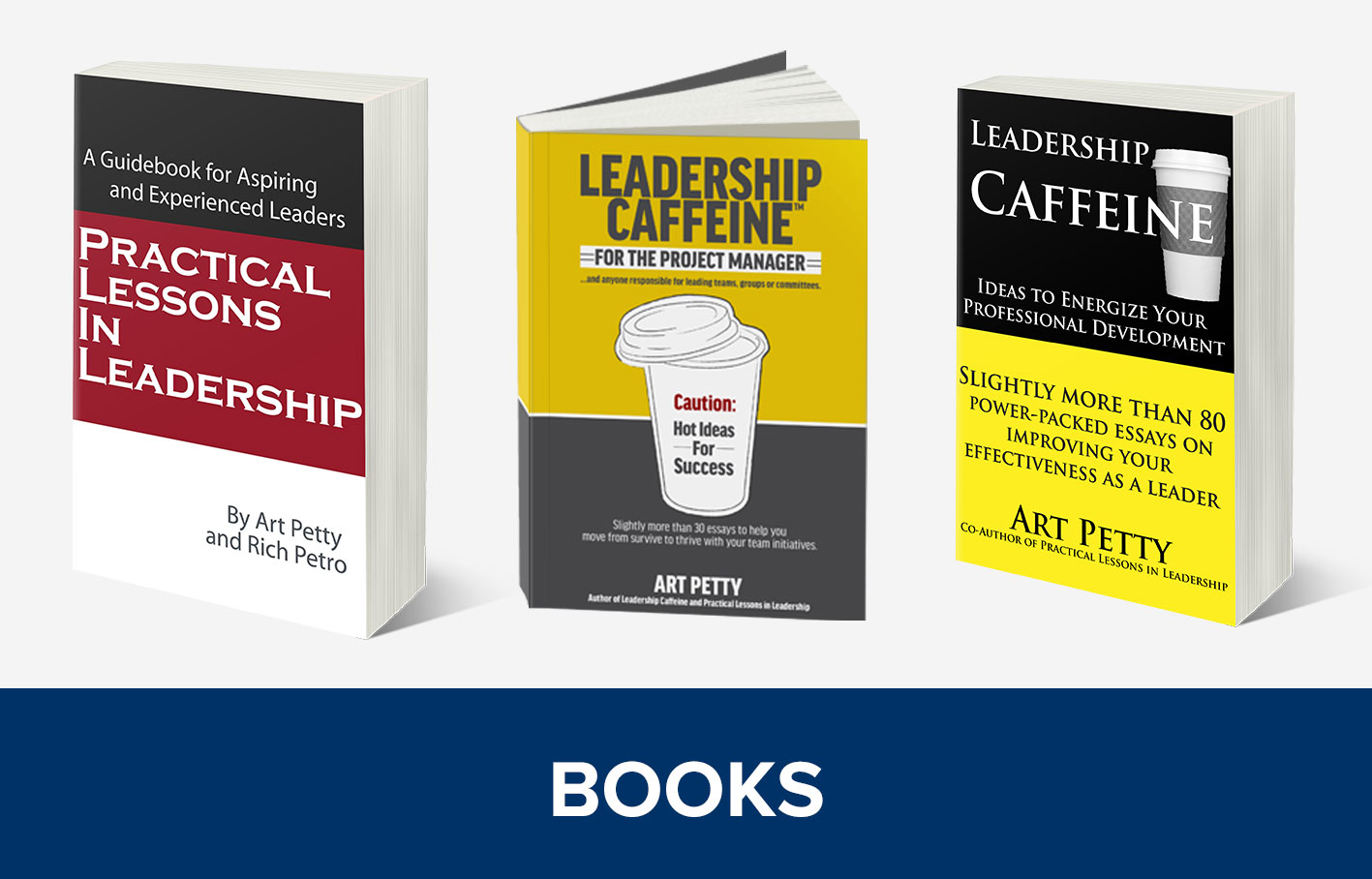
I have written extensively here at this blog and in Practical Lessons in Leadership on the need for leaders to not mask their own faults and shortcomings. In the book, I suggest that the point in time where everyone on the team sees the leader’s mistake is a powerful moment of truth. The leader can run, hide, dodge and deflect or she can show the team that she is human and leverage the failure as a teaching tool. Of course, this only works if she practices this same technique in the other direction when groups or individuals face setbacks.

But what about the apology? How many times have you observed someone in a position of authority make a decision that turned out to be horribly wrong and come back with an apology?

What about the leader that responded to you in a curt or less than respectful manner?

Good thing you didn’t hold your breath, waiting.

At least one of our national leaders went to the opposite extreme, seizing the opportunity to apologize for all of the nation’s historic mistakes ad nauseum (in my opinion). Rumor has it however, that he might not have been quite so apologetic for his alleged personal mistakes. Frankly, it was hard to tell when he was being sincere and when he was selling. You can draw your own conclusion, but I think Bill would have been a powerful force on a used car lot. (Sorry to those that I offended and Bill, I’m sorry too! Hey, this is getting easier!)

OK, enough tongue-in-cheek. Here are some of my thoughts on the issue and use of the apology as a leader. I’m looking forward to hearing from you, and again, if I’ve offended…

Leadership and the Apology

  • Learning how to say the words, “I’m sorry” or “I was wrong” should be mandatory training for all leaders. Part of gaining trust and building credibility is showing everyone that you are human. Knowing how and when to use the words is the art of apologizing.
  • You can easily adopt “apologizing” as a tactic and that is as incorrect as avoiding the apology when you’ve erred. Abuse the tool and people will quickly see through your disingenuous approach. I’ve observed early-career and first-time leaders that would assert themselves (appropriately) and then apologize for having had to assert themselves. This destroys the leader’s credibility.
  • As a leader, you have to make tough calls and often those calls result in some pain. There are many, and perhaps most circumstances where an apology is not needed and would horribly derail your credibility.
  • In circumstances where you’ve slipped and truly offended someone, run, don’t walk to apologize to the individual.
  • Too many apologies for program failures or not hitting your goals and targets, and you will find yourself apologizing to your significant other for losing your job. As a subordinate, you might get away with this once, but as soon as it becomes a pattern, your boss will see your apologies as a mask for incompetence.

The Bottom Line for Now

Does leadership mean never having to say you’re sorry? I don’t think so. Nonetheless, I suspect that most leaders rarely utter the words, more out of fear of showing weakness than due to their lack of remorse for their transgressions.

What are your thoughts? I’m interested and suspect many readers are as well on the role and use of the apology as a leader.

Next Page »

  • Art Petty

    Art Petty Welcome to Management Excellence where the focus is on building better leaders and creating high performance organizations.

  • Building Better Leaders

    Building Better Leaders - Move Your Career Forward

    Art Petty's Building Better Leaders programs in Leadership, Management and Developing as a Senior Contributor offer powerful and practical guidance for motivated professionals.

    All programs available on-site in group format and select programs available in a distance learning PLUS personalized mentoring format.

    Visit Building Better Leaders to find a program to help you or your team move forward.  And don't forget to subscribe to the Building Better Leaders Leadership Tip of the Day.

  • Management Excellence Tools

    Download the Management Excellence Guide to Effective Trade Show Marketing.


    What's Your Strategy & Execution (STREX) Quotient? Download and use the survey to help you gauge your organization's Strategy & Execution effectiveness and identify areas for improvement.


    e-book-Leadership and the Project Manager - Developing the Skills that Fuel High Performance Download the pdf or go to the e-book pages on this site and contribute to the conversation

Blog Subscriptions

Email:

RSS Feed Subscribe to Management Excellence

Connect With Me On

View Art Petty's profile on LinkedIn
Art Petty on Twitter

E-Newsletter Mailing List

Join my e-newsletter mailing list and receive the latest in best-practices content for leadership, sales & marketing and strategy.
E-mail:  
Privacy by SafeSubscribe

Alltop