Take Responsibility for Your Own Development
In my not inconsiderable experience, too many people in business are in search of the proverbial silver bullet.
Unfortunately, there are no true silver bullets.
There are no quick fixes for any of: revenue shortfalls, product development problems, morale issues or disruptive competitors that have inconveniently changed the worth of your entire value proposition. The same holds true for your own professional development.
I’ve yet to figure out how to learn to lead without leading…and making mistakes. Can’t do it.
There are no courses or books that substitute for experience, although there are plenty to help you as you are gaining experience. Strategy doesn’t show up in a crystal ball, great execution doesn’t happen by accident and head-turning results that propel careers aren’t based on good luck.
If you are fortunate, some of your professional development will occur as a result of the feedback and guidance from an effective leader or mentor. For most however, it’s all up to you. You need to put the time in, read the books, apply the lessons, experiment, learn, fail, unlearn, relearn and then try some more.
At the end of the day, the reward and the rewards that you derive from your career are a function of what you put into it. The next time you attend a training class and say, “I’ve heard all of this before,” stop and recognize that it’s not hearing it that counts. It’s what you do with it.
Want to Lead? Consider These Questions: #7 of 7
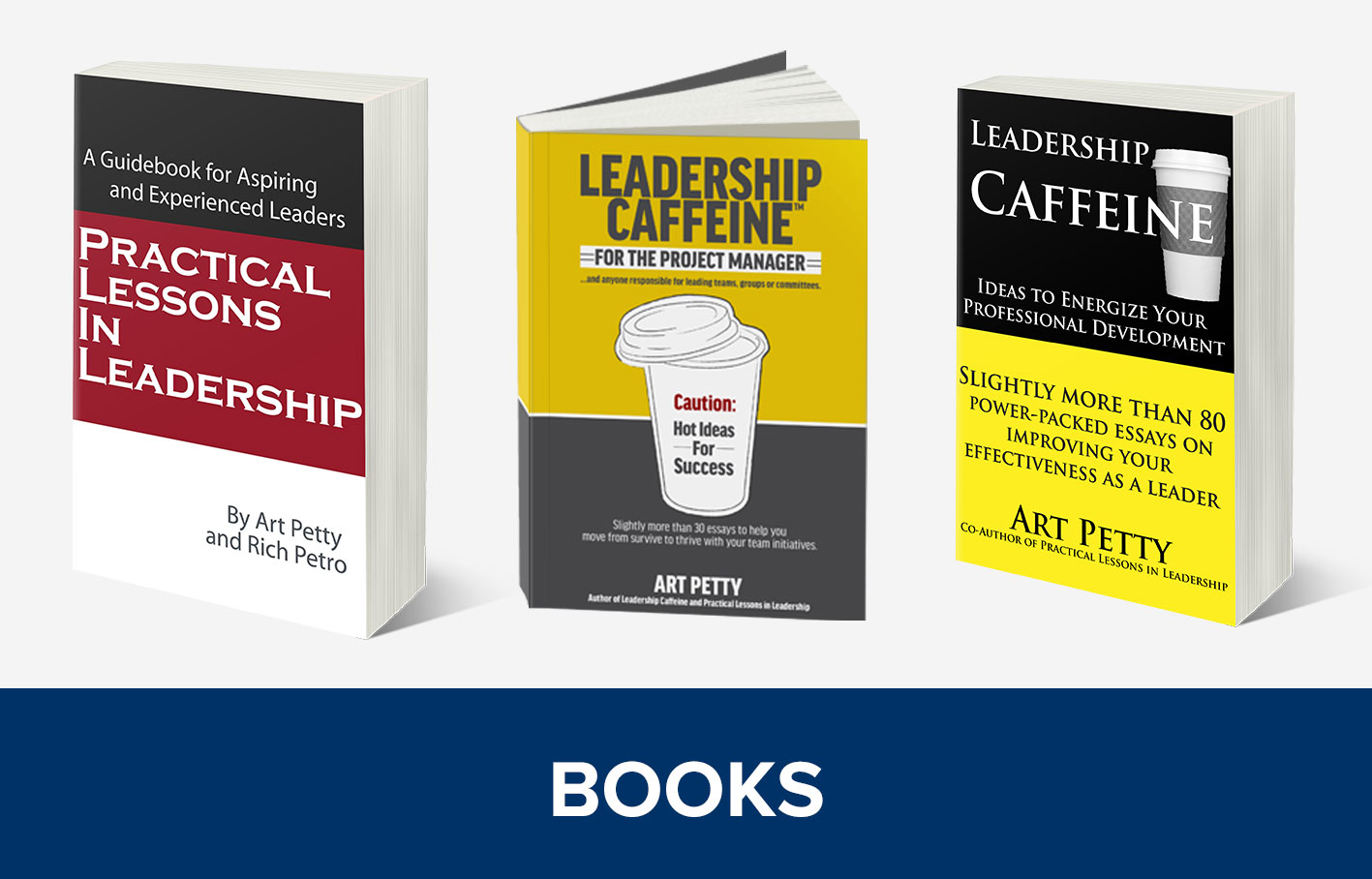
Note: the Seven Key Questions for Ambitious, Aspiring Leaders, are presented in the book, Practical Lessons in Leadership by Art Petty and Rich Petro. I’ll explore each question here at Building Better Leaders through individual “Leadership Tip of the Day” posts, offering ideas for investigation and discussion.
The first six questions in this series challenged you to think through issues that are both philosophical and powerfully practical:
- Why do you want to lead?
- Do you understand the true role of a leader?
- Do you understand that the skills that made you successful as an individual contributor are not the skills that will carry you forward?
- Are you prepared to give up your domain expertise as your foundation for results?
- What do you believe are the skills and personality traits that you need to succeed as a leader?
- Do you understand that you will be judged by the output of your team and held accountable for this output?
If you’ve made it through the investigation of questions 1-6, it’s time for you to consider what your daily work life will be like as a leader.
7. What do you imagine your workday life to be like as a leader?
For those accustomed to having some semblance of autonomy over their daily lives, the transition to a role as a leader can shock the system. This move from a “me-centric” daily routine to “everyone but me” focus has caught many an early leader by surprise. The “day in the life” discussion fostered by this question will help clarify what a leader does everyday and how it differs from the role of individual contributor. One suggestion is to allow aspiring leaders the opportunity to shadow you from time to time, as a means of understanding just how unglamorous leading can be. Another suggestion is to have the aspiring leader spend a little bit of time with other leaders and interview them about their daily and weekly activities.
The Takeaway from The 7 Questions:
The Seven Key Questions for the Ambitious Aspiring Leader are powerful conversation starters to support a manager’s leadership development activities. They are not intended to be delivered in machine-gun style, but rather to be used in concert with an approach to helping individuals discover and explore the profession of leadership. Not everyone should lead, yet someone motivated by advancement might believe that leadership is the best or only way to achieve this goal. An effective mutual discovery process is the leader’s best friend in helping identify leadership talent and in helping individuals come to their own conclusion on whether leading is a good choice for their own careers.
Leadership Caffeine: Developing as a Senior Contributor
Filed under: "To Do" List, Career, Leadership, Leadership Caffeine, Professional Growth
I regularly use the label “Senior Contributor” (SC) to reference a state of management maturity that tends to exist somewhere between upper mid-level management or senior knowledge worker and the executive layer. While the hierarchical comparison may be imperfect, it’s an easy way for people to understand my intent with the phrase.
The SC is a professional (manager or individual contributor) on the brink of executive qualifications and someone that has displayed effective formal and informal leadership skills, value-creating critical and strategic thinking abilities, credible executive presence and a strong operating and quality orientation.
The SC is an individual that whether by design or accident has consistently been challenged to deal with complex and ambiguous business situations and has proven capable of rallying efforts, forming high performance teams, and facilitating results that create value for customers, improve operations and thump competitors.
This is one super contributor!
Sound like a mythical super-hero that was graced with unique powers beyond those of us mere mortals, and that dons his/her mask and cape to fight bad business in the dark of night? While you’ve got to be sharp to be a SC, you most definitely don’t need to be from a planet with a red sun or to have encountered a radioactive spider to lay claim to your own mask and cape. However, you do have to deliberately focus on developing and honing your skills to gain membership into this league of outstanding professionals.
Senior Contributors are Made, Not Born:
I’ve yet to meet an SC that wasn’t personally and professionally driven to learn, grow, overcome weaknesses, develop talents and place himself/herself in challenging situations as part of the development process. While some people have natural gifts that lend themselves to certain situations, membership in this league is open to anyone willing to put the effort forth. However, not everyone has the Intestinal Fortitude (IF) to succeed.
7 Suggestions for Developing as a Senior Contributor:
1. Look in the mirror and recognize that this battle to develop and excel is all up to you. Your firm doesn’t owe you this and cannot train you on it, and you certainly won’t achieve the level of SC through seniority and marking time.
2. Face your fears. Given my description of the SC above, almost everyone will have to face and overcome some areas of discomfort. Typically, the development of advanced communication and presentation skills (and the confidence behind the skills) is the most frightening area for people to face. Ironically, these may be the easiest to learn, practice and refine. Others like critical and strategic thinking capabilities require a conscious effort to rewire long-standing ways of thinking and acting. Easy to describe, but truly difficult to achieve.
3. Learn to adjust your altitude. SCs are capable of scaling heights from the big picture of market and industry forces and changing customer attitudes and perceptions to the nuances of process and operating improvements. As part of the “rewiring” or better yet, new wiring, emerging SCs must focus on connecting tasks to strategies and market forces and vice-versa. Take some mental Dramamine, because the altitude adjustments will be fast and furious.
4. Quit looking for silver bullets. There is no training course that once completed will bestow upon you the certificate of Senior Contributor. There are many, many, many resources, experiences and opportunities to gain insights and hone skills, but there is no silver bullet, so quit looking for it.
5. Great managers and mentors are priceless. A good manager and/or a good mentor can help you along the way. A manager that is committed to supporting the development of her people understands how important it is to challenge and coach team members. A mentor offers the perspective and context of experience and can serve as a valuable navigator. For those of you that lack one or both (a good manager and a mentor), the bad manager can serve as inspiration. I long ago developed a mental list of “things never to do,” when it was my day to lead.
6. Use your time wisely. Read, read and then read some more. From Harvard Business Review to Fast Company to historical biographies, you cannot spend enough time soaking up the teachings of successful people and people that have experienced and persevered through remarkable hardship. Make certain that most of your reading takes place away from the business bookshelf and tends towards history, biography and even literature.
7. Adopt a personal quality improvement program. Just as Franklin and Jefferson diligently recorded their decisions and their daily progress and activities, find a way to begin recording your own actions. Set goals, monitor and measure progress and strive to improve.
The Bottom-Line for Now:
As a senior executive, you want high performers and SCs driving my organization. What are you doing to foster an environment of constant learning and continuous challenge to support the emergence of SCs?
As an aspiring professional, responsible for forging your own brand in a complex world over a career that will easily span 50 years in many cases, what are you doing to step it up? Turn off the television, back away from the urgent unimportant, learn to overcome your own natural resistance, and get on with the good and hard work of developing yourself!