Leadership Caffeine: In Pursuit of Your Potential
Filed under: "To Do" List, Career, Leadership, Leadership Caffeine, Marketing, Marketing Yourself, Performance, Professional Growth, Values
You’re good, but do you have it in you to be great?
I work with a lot of good professionals. These are smart people, all technically adept at their jobs and committed to working hard for their organizations.
Only a few of these good individuals push themselves to become great.
These are the driven ones. Driven to learn, driven to push themselves, comfortable with trying and failing and well aware that there is a pearl of wisdom underneath a nugget of gold in every situation. They are looking and digging and diving for those pearls and nuggets.
They’re in competition, but it’s not versus an external adversary. They are in competition with themselves. With resistance. With the temptation to take the easy route and be “just good enough.”
I love working with these leaders. They are challenging and they are open to challenge. They’ve long since recognized the need to reflect and to gain feedback on their performance at every opportunity. They are relentless in pursuit of their own improvement.
I also recognize that not everyone is driven. That’s OK. Just make certain if you fit into this category to brush up on your follower skills. At least strive to be a great follower.
For those that sense that there’s more in you…that you want to leave it all out there on the field, perhaps you’ll see yourself here, or, perhaps something here will kindle your flames of self-improvement.
6 Signs that You Are Driven to Pursue Your Potential:
1. You’re comfortable revisiting the basics of your profession. If it’s leadership, you understand the need to revisit the purpose of your role and to continually strive to improve as a coach, as a mentor, a motivator and as a decision-maker.
2. You work hard to manage your own brand. While this sounds self-centered, it’s actually socially intelligent. You recognize that your professional value proposition…the famous “Brand Called You” is all that you have and you work hard to see if the value proposition in your mind matches what others see in you.
3. You are genuinely interested in what others have to say. This natural tendency to seek the other person’s point of view is more of that social intelligence and part of what makes you an authentic professional.
4. You are genuine. Your internal values and principles match your external persona. You’re in balance. A quote that I read somewhere offered this as “you believe what you say and you say what you believe.”
5. You view power as the means to right kind of more. Not more money or fame, but rather the ability to produce more, to contribute more, to create more, to help more.
6. You recognize that success comes in many forms, but the best form is that internal sense of “I gave my best, there was nothing more.” Of course, you always wonder whether there was just a little bit more in you to give.
The Bottom-Line for Now:
The life of a driven leader or a driven professional is filled with struggle and joy. Ironically, the joy is truly in the struggle. You just don’t figure that out until much later.
Don't Expect Easy-My Top 15 Suggestions for Coping as a Professional
“Easy” is not a term that should be on your mind, except when it comes to improving the experience for your customers. Outside of making life easier for your customers, there are few circumstances where “easy” shows up or where you are justified in expecting things to go that way.
If you’re at the early stage of your career, the transition from home to school to job is an interesting one. If you are a recent graduate, chance are that you’ve already discovered that things aren’t so easy in this economy as you pound the pavement looking for a job. While this awkward phase will pass in time, your immersion in the workforce will underscore why “easy” is a foreign term.
And of course, if you’ve been around the block a few times, you’ve already discovered that “easy” is rare indeed.
Things That Are Most Definitely Not Easy in Business:
- Working for a difficult boss
- Becoming a boss
- Becoming a good boss
- Finding great people
- Hiring the right people
- Undoing the process of hiring the wrong people
- Competing in the market
- Competing internally
- Leading without authority
- Creating a new strategy
- Implementing a new strategy
- Getting others to follow
- Following
- Making mistakes
- Learning from mistakes
- Developing as a senior contributor
- Switching jobs
- Switching careers
- Continuing your education
- Reinventing yourself
- Balancing life and work
Guidance-My Top 15 Suggestions for Coping with “Not Easy”
- I’ve known a few people that seemed to have a free-pass through life’s difficulties, but for the rest of us, here are my suggestions and words of encouragement:
- Attitude is everything. Make certain that yours stays positive about the challenges in front of you.
- There is no substitute for hard work. Keep pushing the rock.
- Success is in the details. Don’t be a 70-percenter. Learn to finish.
- It’s all about learning. Mistakes are your best teachers, just don’t make the same ones over and over again.
- As my former boss would say, “Man plans and god laughs.” Interpret that to mean that things mostly don’t go as you expect them to.
- Hope is a crappy strategy. See also the note on hard work.
- You’ll make mistakes. Don’t wallow for more than a few minutes. Then shrug your shoulders and move on to your next challenge.
- There are no guarantees. There are no guarantees of how long any of us will be here, much less guarantees of employment and advancement.
- You’ll have to work for everything you get. Get over it.
- Fear is the mind-killer. I love that quote from Frank Herbert. Don’t let fear rule your life.
- Measure-twice and cut once. An extra emphasis on quality will serve you well.
- Compensation is nice. Ultimately enough is enough. It’s a hollow goal to just chase the money.
- The joy is in the journey, not the destination.
- Touch people in the right way during your journey. You go through this once. Make it count.
–
Notes from Art:
-Don’t miss the latest issue of the Management Excellence Newsletter. Register at Building Better Leaders or Management Excellence (far right column)
-Just announced: The Management Excellence Book Series, with episode #1 featuring an interview with Bob Sutton, author of Good Boss, Bad Boss.
Leadership Caffeine: Learning to Adjust Your Altitude
Filed under: "To Do" List, Career, Leadership, Leadership Caffeine, Product Management, Professional Growth, Project Management
While the phrase is most commonly referenced as attitude adjustment, I’ll go out on a limb and suggest that one of the abilities that leaders must develop to be effective is the ability to adjust their altitudes.
Good leaders learn to scale institutional and intellectual heights with ease and comfort, quickly adapting to the audience and situation.
Examples of Frequent and Successful Altitude Adjusters:
- There’s the CEO that’s built a career around being a brilliant strategist and an even better operator. Watch him work a factory floor and you’ll see him descend from the lofty level of the boardroom to the critical issues of people and process. He’s equally comfortable in the rarefied air of strategy and vision and market forces or as an observer and student on the shop floor where true value is being created.
- The small business owner that serves customers all day long and drives home with an emerging vision for how her business must change in order to grow.
- The college professor that translates the philosophical foundations and theories of her specialty into practical, relevant concepts and tools that clarify, stimulate interest and offer some form of sustaining value. This professor offers knowledge and insight designed for use.
- The Product Manager that is able to move seamlessly from detailed requirements discussions with engineers in the morning to a concise strategy discussion and competitive analysis with executives in the afternoon.
- The Project Manager that pivots on one foot to resolve a team dispute and then pivots back to the work of helping his team learn to make better decisions.
Regardless of the specifics, these effective formal and informal leaders move seamlessly from the detailed to the general, from the tactical to strategic and from the confusing and complex to the simple and straightforward as easily as you are reading this post. Whether this is an innate ability for some or a learned skill for others, those that practice adjusting their altitudes are significantly more effective than others stuck at one level.
Of course, those that are effectively stuck at one level are requiring everyone else to adapt, and that takes energy and breeds stress and strife. These less than effective leaders require both the proverbial attitude adjustment as well as some solid lessons in learning to adjust their altitude.
5 Suggestions for Learning to More Effectively Adjust Your Altitude:
1. Seek first to understand and then be understood. I love that saying for its wisdom. I observe many leaders that engage with their team members on issues for just a few moments and then cut them off mid-stream, with an opinion, a decision or an order. Teach yourself to clamp your jaw shut and listen and process on all of the verbal and non-verbal cues that are so generously placed in front of you. The time you invest in focusing and listening and then thinking about the issue being presented will give you time to adjust your altitude to the right level.
2. Plan your message. Knowledge workers and individual contributors should redouble their efforts to plan the messages for exchanges with executives. While you may be personally fascinated by the details of your project or product, it is critical to recognize that those in executive roles want you to give them the time…not to tell them how to build the watch. For unscheduled, hallway or elevator exchanges, condition yourself to move into time-teller mode, again resisting the urge to showcase your in-depth command of every detail. Your overall work and results will showcase whether you have command of the details.
3. Recognize that context is key to motivating action. Assume that no one else has thought through the issue in as much depth as you have. Management teams that vigorously debate strategy for weeks and then become satisfied on a direction and choices must recognize that no one else in the organization has any context for either the direction or the choices. This common communication gap is actually more like a grand canyon of misunderstanding, both in expanse and in height and depth.
4. Learn to see patterns in problems. In your daily work life, develop the habit of identifying recurring problems and patterns and then suggesting and implementing ideas that eliminate these problems and improve organizational practices.
5. View your role and tasks in the context of a long value chain. Instead of thinking about what you do as discrete and separate from people in other groups, recognize that your work impacts the performance of others along the chain. Seek to understand how and why others depend upon you and better yet, develop an approach that emphasizes constantly measuring your own performance against how well you are meeting the needs of others that come after you in the organizational value chain.
The Bottom Line for Now:
For your own professional development, challenge yourself to understand issues from all levels. The best leaders and the best employees connect their work to creating value for customers or solving vexing internal issues. These effective professionals learn to scale heights from idea to implementation, from problem to improvement and from understanding to new direction. They strive to become effective communicators at all levels and they constantly focus on understanding what is reality to individuals at all layers of the organization.
While the vertical metaphor of altitude may grossly simplify what is really going on here, it’s simple and comprehensible enough to grasp and apply. For today and everyday, make certain that you are challenging yourself to adjust your altitude. You might just find a lot more enjoyment and success in your work, in the process of scaling the issues.
My Personal Journey Towards Building Better Leaders
Filed under: "To Do" List, Career, Leadership, Performance, Professional Growth
Note from Art: I’m taking time out from my usual blogging activities today to share with you a bit about the background and approach of my new program and website: Building Better Leaders. Back tomorrow with regularly scheduled content!
My Personal Journey Towards Building Better Leaders:
To understand the genesis of today’s launch of my new Building Better Leaders service and website today, you have to understand just a little bit about my personal-professional journey to this point.
I had a stellar corporate career and was fortunate to work for great organizations and great people every step of the way. I earned my first promotion to a supervisory role 18 months out of college and other than a short stint as a corporate staff member in an industrial conglomerate and the past few years on my own, I’ve always been responsible for teams and people and results. Yeah, I learned how to lead with the pain of a million mistakes! However, with my best humble voice, the teams and businesses that I was fortunate enough to be a part of consistently won in the market by all reasonable financial and customer measures. Hey, people truly are the difference makers!
After we sold the last company (from turnaround to market leader) and I came home to be with my family through my mother’s illness, I decided to reinvent my career and focus in the one area that provided consistent joy and challenge, developing early and mid-career and front-line and mid-level professionals.
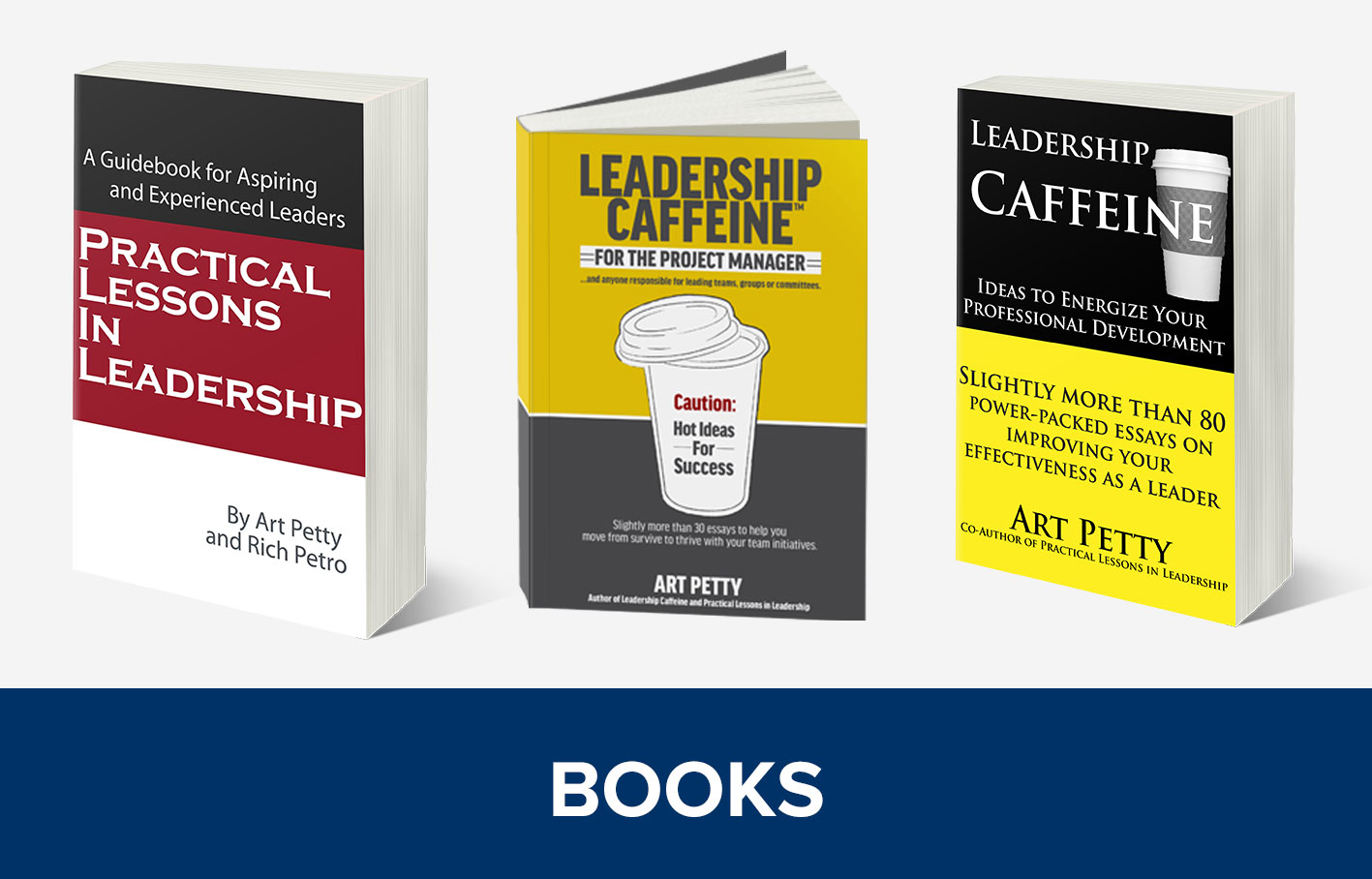
Step one was writing the book, Practical Lessons in Leadership with Rich Petro (thanks for joining Rich!) and then step two involved honing my skills as an educator and content creator. Again, long story short and several thousand people through dozens of classes and training programs and keynotes later, the following issues and needs started jumping out from comments and feedback and inquiries:
- Motivated professionals are hungry to learn and develop and often frustrated with the lack of time, money, access or even availability to the type of developmental support that will make a difference now and in the future.
- Traditional models for training don’t offer a sustaining component, including workplace assignments, feedback and mentoring.
- Coaching is often out of reach for those earlier in their careers.
- Time and cost are issues for everyone.
Enter Building Better Leaders:
After conducting more discussions than I can count with professionals in product management, project management, marketing, new first-time leaders, those interested in leading, technical professionals thrust into leadership, I decided to create something that would solve the problems of: practical content, cost, access, sustainability and guidance.
And then I spent a year trying to figure out the technology pieces to the puzzle…as well as creating the initial programs (twice) to learn. Note…a key component of the puzzle was the distance learning delivery platform. I discovered the great folks and offering from Digital Chalk and they are truly enabling me and other professionals to serve up great programs on demand.
And that brings me to today. Paraphrasing liberally from Guy Kawasaki, build it, get it to market, take feedback and keep improving, and that’s what I’m doing.
Here’s the Commercial:
Building Better Leaders consists of:
- Executive and senior practitioner developed, practical content for specific audiences. This is the type of practical, battle-proven material backed by years of hard won experience that is hard to find in traditional education or training settings.
- A series of lessons delivered over 45 to 60 days as structured, on-demand multimedia programs highlighting core issues, examples and approaches.
- Action Guides for every lesson reinforcing core objectives and detailing practical workplace assignments.
- Executive mentoring (from me or other program developers)…typically 2-3 hours per program of personal distance mentoring.
- Unlimited e-mail access on course concepts and applications with the program creator/mentor.
- A price point that doesn’t break anyone’s budget.
The right content plus mentoring plus developmental activities plus access, plus affordability. In many regards, this is a new approach to filling critical skills gaps and allowing people to take charge of their own career development.
The first two programs are core leadership programs: Considering the Move to Leadership-What to Expect and How to Prepare and Succeeding as a First Time Leader.
We will move quickly into audience specific programs with Leadership for Technical Professionals and High Performance Event Management for Marketing Professionals in January.
Oh yeah, and did I mention that I created a new Building Better Leaders blog. I’ll be focusing on blocking and tackling and professional development related content…and will strive to keep it different than the material here at Management Excellence. I hope that you’ll join me in this new blog.
And the Dirty Little Secret of Building Better Leaders:
Supporting the development and advancement of great professionals is the focal point of Building Better Leaders. However, I also expect that this will serve as a powerful collaboration platform for me to work with other great professional trainers, coaches and executives interested in serving their audiences using this format. Whether I’m involved helping others create programs or simply enabling them to move their programs into this format, I look forward to some outstanding new collaborative adventures!
The Bottom Line for Now:
The grandest cathedrals start with vision and a single stone. Great careers start with that first step and first hard-won lesson. The vision is there, the first stone is set in place and there are careers and leaders and great professionals to be created. Let the work begin.
Turnarounds and Talent is Overrated: Two Great Posts
Some days others have created such interesting posts, the best thing that I can do is to encourage you to head in their direction. Today’s posts from some great pros are too good to pass up. Point your browser towards both of these and enjoy!
- Kris Dunn at The HR Capitalist offers his review of the new book by Geoff Colvin, Talent is Overrated in…“Talent is Overrated Primer-What the ****is Deliberate Practice?” I’ve not yet read this book that explores whether talent or “pure focused hard work” is the key to becoming a world class performer in any discipline, but after Kris’s review, it’s on my list. Check out the review and gain some fascinating perspectives on the concept of “Deliberate Practice.” Hint: It’s a lot more like hard work than fun.
- Wally Bock at the Three Star Leadership blog offers his thoughts on the Turnaround at McDonald’s since Jim Cantulpo has taken over. In McDonald’s-A Turnaround Story Wally and the folks at McDonald’s serve up some useful lessons for all of us working to right our ships. And hey, it’s nice to read about something working out in this economy.
Thanks to both Wally and Kris for the great posts today.