Just One Thing: Leading is Lonely Work

Image of an elevator button with the number 1 and the braile equivalent

Water, water, every where,
And all the boards did shrink;
Water, water, every where,
Nor any drop to drink.

-Coleridge: The Rime of the Ancient Mariner

Leading is lonely work. The higher you climb on the ladder, the tougher and lonelier the decisions become. Get used to it.

No one ever signed on as a senior leader because of the potential for camaraderie.

At the end of the day, you own the hard calls on people and direction. While your “kitchen cabinet” of advisers will offer opinions aplenty, there’s no avoiding that moment in time when your stomach is churning and the face you are staring at in the mirror matches the turmoil in your gut.

Your leadership character is forged in these moments of intense self-doubt. Accountability and responsibility are on your shoulders, but fear and uncertainty rent space in your mind. The best leaders fight through the fear. They understand that a non-decision is typically the worst outcome.  And they make a decision. Alone.

“Okay, We’ll Go.” –General Eisenhower on the decision to launch the invasion of Normandy in spite of less than optimal weather and the conflicting opinions from his advisers.  While estimates vary, casualties were as high as 10,000 on this day, yet this decision to go at that moment in time set the stage for the end of World War II.

Contrary to popular belief, senior leaders don’t have a more accurate view to the future than others. They may have a clear view to the risks, but they most certainly don’t have a crystal ball that foretells how major decisions and directional choices will unfold. Yet, they make these tough calls, because they know the cost of not moving forward is high.

The Bottom-Line for Now:

No magical lists of “Ten Things To Do,” here, just a statement of reality. If you aspire to senior leadership, expect to spend a fair amount of time navigating alone. Surround yourself with the smartest people you can find and seek their counsel. Use data to your advantage. Learn from prior mistakes. And importantly, learn to accept that those moments in time when you are staring back at yourself in the mirror and your stomach is churning over the pending decision, are those moments when you are doing your job.

More Professional Development Reads from Art Petty:

Don’t miss the next Leadership Caffeine-Newsletter! Register herebook cover: shows title Leadership Caffeine-Ideas to Energize Your Professional Development by Art Petty. Includes image of a coffee cup.

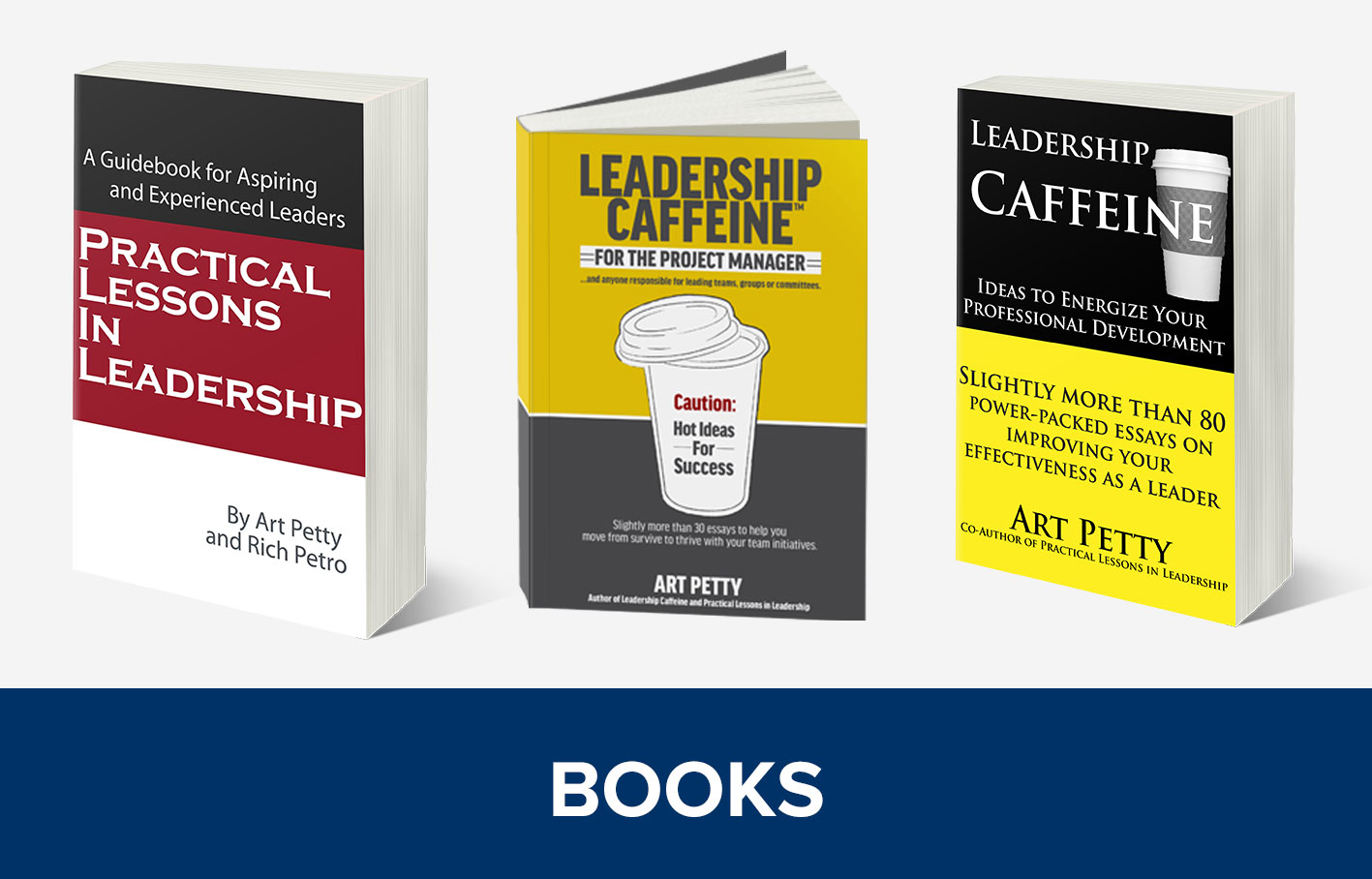
For more ideas on professional development-one sound bite at a time, check out Art’s latest book: Leadership Caffeine-Ideas to Energize Your Professional Development

Download a free excerpt of Leadership Caffeine (the book) at Art’s facebook page.

New to leading or responsible for first time leader’s on your team? Subscribe to Art’s New Leader’s e-News.

An ideal book for anyone starting out in leadership: Practical Lessons in Leadership by Art Petty and Rich Petro.

Need help with Feedback? Art’s new online program: Learning to Master Feedback

 Note: for volume orders of one or both books, drop Art a note for pricing information.

New Leader Tuesday-Develop as a Decision Coach

Sign indicating "Brand New and Fresh"The New Leader’s Series here at Management Excellence, is dedicated to the proposition that one of the most valuable things we can do is support the development of the next generation of leaders on our teams and in our organizations.

The best leaders I’ve worked with and for are not only good decision-makers, they are effective decision-coaches. They understand the importance of teaching their teams how how to navigate the pitfalls and complexities of decision-making in pursuit of the best results for the organization.

6 Great Habits of Effective Decision Coaches:

1. They Defuse Emotionally Charged Situations. Of all of the decision-traps in the workplace, the tendency to approach a tough situation with a strong sense of emotion is a very human issue. Good decision-coaches create opportunities for team members to vent…and then they focus their energies on situation assessment, information needs and options development.

2. They Strike Out Fear. While closely related to number 1, the issue of fear in the workplace merits specific attention. Two late great thinkers, Frank Herbert (Dune) and W. Edwards Deming had it right. Herbert’s, “Fear is the mind killer” said it best, and Deming’s plea for managers to strike out fear in the workplace reflected his understanding of how destructive this force can be when it comes to making decisions and managing.

3. They Monitor and Manage Framing. Good decision-coaches understand the power of framing. They know that the same issues framed as a positive or a negative can result in very different decision-paths. They encourage neutral frames or, they facilitate the development of decisions around both positive and negative frames to ensure clarity of thought and diversity of idea generation.

4. They Teach Teams How to Talk. Most of our group discussions are unstructured and chaotic. We tend to argue our way forward, and good decision-coaches understand the power of DeBono’s parallel thinking…getting everyone looking at the same issue at the same time as a means of designing our way forward. (See my Manager’s Toolkit post, “Better Design for Workplace Discussions,” including a link to DeBono’s book, Six Thinking Hats.)

5. They Manage Time Pressures. We’re all in a hurry, however, when faced with a complex or important issue to resolve, great decision-coaches know that speed kills. While certain environments demand snap decisions (think E.R. or battlefield), many of our corporate and organizational decisions can benefit from a “measure twice, cut once” approach. The best coaches manage the clock.

6. They Help Teams Build Decision-Muscle Memory.  The best decision-making teams learn from prior decisions. Great coaches ensure their teams maintain and review a decision log that captures the circumstances, assumptions and expectations of major decisions. Regular review of the outcomes and lessons learned will strengthen the team’s future decision-making abilities…if nothing else by showing teams where they whiffed on process or assumptions from earlier decisions.

The Bottom-Line for Now:

At the end of the day, we are all evaluated on the efficacy of our decisions and those of our teams. Good managers and leaders deliberately teach their teams to navigate this complex, trap-filled environment in pursuit of the right decisions and ever improving outcomes.

More Professional Development Reads from Art Petty:

Don’t miss the next Leadership Caffeine-Newsletter! Register herebook cover: shows title Leadership Caffeine-Ideas to Energize Your Professional Development by Art Petty. Includes image of a coffee cup.

For more ideas on professional development-one sound bite at a time, check out Art’s latest book: Leadership Caffeine-Ideas to Energize Your Professional Development

Download a free excerpt of Leadership Caffeine (the book) at Art’s facebook page.

New to leading or responsible for first time leader’s on your team? Subscribe to Art’s New Leader’s e-News.

An ideal book for anyone starting out in leadership: Practical Lessons in Leadership by Art Petty and Rich Petro.

Need help with Feedback? Art’s new online program: Learning to Master Feedback

 Note: for volume orders of one or both books, drop Art a note for pricing information.


Leadership Caffeine-3 Situations to Quality Check Your Gut Instinct

image of a coffee cupWhile it’s clear our guts don’t do any heavy lifting when it comes to making decisions, that sense we describe as “gut feeling” is something most of us rely on to guide us through life’s challenges.

That feeling we get that we ascribe to our gut instinct is actually an outcome of our cognitive processes doing their job. Our brains have a wonderful mechanism for constantly evaluating situations against patterns from prior experiences and then unbeknownst to us, attaching emotional tags to those patterns. This pattern recognition plus emotional tagging is what we interpret as our “gut” feeling.

Knowing when to trust and when to question our gut instinct is an interesting dilemma. This blink reaction has served humans well for fight or flight circumstances or, when a situation forces us to consider crossing ethical or moral boundaries.

Where it becomes a bit unreliable is when we are exposed to new situations where prior patterns aren’t meaningful and/or where we end up with an emotional tag that distorts our ability to be objective.

As we grow as leaders and take on more responsibilities, one of our core challenges is making decisions in situations filled with ambiguity. From talent selection to strategic choices to career steps, out gut instinct never leaves us, however, it’s good to have the presence of mind to quality check our own initial reactions to many situations.

3 Situations When Senior Leaders Should Quality Check Their Gut Instinct:

1. Talent Choices. This is a sticky one for most leaders. I’ve heard from many who confess to trusting their initial positive impressions too much, only to learn down the road that they missed something critical about the individual. Others report spending a great deal of time trying to talk themselves into a candidate who seems great on paper, but left them with a negative blink reaction.

My guidance: slow down the hiring process and be deliberate about getting beyond your gut reaction and better understanding the candidates behavioral approaches to situations. When conflicted, involve trusted outside advisors to evaluate the candidate and be certain to not taint their views with your own concerns or opinions.

2. Strategic Choices. Many critical new direction or investment decisions involve moving in unfamiliar directions, and individual executives and senior management teams often struggle to make these critical and uncomfortable leaps into the unknown.

The lack of recognizable patterns and/or the tags associated with risk, the unknowns and the gravity of the decision are all powerful influences here. Our tendency as humans is to prefer the status quo….or something that resembles a close approximation of what we recognize as familiar. Re-evaluating your resistance to and initial negative gut instinct is important to making a good decision.

Given the gut reaction to stay closer to home versus pursuing new and different opportunities, it’s critical for you and your team members to get help objectively assessing whether your interests are best served by remaining closer to the status quo. Rethink the external factors prompting the decision-choice, and get help evaluating whether the risks from not moving might just exceed those from stepping down an unfamiliar path.

3. More Time and Money Decisions. If you’ve invested a considerable amount of your professional equity along with your firm’s capital in a venture that is failing to live up to expectations, your gut instinct is often to seek more time and money to fix the situation. This is one situation where your gut can lead you down the path of disaster.

Instead of stepping neatly into the escalation of commitment trap, make certain to quality check your instinct with some good outside advisors. Some situations may well merit more time and money, but repeated calls for these precious assets are a sign of trouble. As a senior leader, you can help minimize the risk of your own team members falling into this trap, by cultivating a culture where it is encouraged to tackle the tough issue of killing projects.

The Bottom-Line for Now:

Many people rely on their gut instincts for tough decisions. While your instinct might be right more often than not, you can improve your batting average on the big issues by quality checking your initial impressions before moving down a costly and potentially mistaken path. Trust but verify.

Don’t miss the next Leadership Caffeine-Newsletter! Register here

For more ideas on professional development-one sound bite at a time, check our Art’s latest book: Leadership Caffeine-Ideas to Enebook cover: shows title Leadership Caffeine-Ideas to Energize Your Professional Development by Art Petty. Includes image of a coffee cup.rgize Your Professional Development

Download a free excerpt of Leadership Caffeine (the book) at Art’s facebook page.

New to leading or responsible for first time leader’s on your team? Subscribe to Art’ New Leader’s e-News.

An ideal book for anyone starting our in leadership: Practical Lessons in Leadership by Art Petty and Rich Petro.

Need help with Feedback? Art’s new online program: Learning to Master Feedback


Leadership Caffeine-Why You Might Want to Pause Before Voicing that Decision

image of a coffee cupThe next time an employee or a group is looking to you to make a tough decision, you might want to screw up your courage, boldly look at them and…say nothing.

Teaching others to employ effective decision-making processes is one of the most important and often ignored responsibilities of those in leadership roles. Unfortunately, training your team to look to you for the calls on how to fix problems and move forward is much easier than teaching your team members to stand on their own for most issues.

You are fighting inertia when you pause and look to someone else or to a group to process on a decision. More than likely, you’re in a leadership role specifically because those above you developed trust in your decision-making abilities. It’s part of what got you this far, and now, you’re being asked to pause and to teach. Not voicing your decision is likely much harder than making it.

Too many managers incorrectly wield their decision-making authority, either because they are particularly comfortable in this role, or, because they view it as a symbol of strength or even power. Some use decision-making authority to control others.

Almost counter-intuitively, it takes more strength to not make a decision for someone else, especially when the answer is clear. And as for power, the old adage of you have to give it to get it is particularly relevant here.

7 Reasons Why You Should Back Off and Let Others Make Decisions:

1. Placing the responsibility for decisions on others is a sign of confidence and respect.

2. Showing others you are comfortable delegating decision-making enhances your leadership credibility.

3. Nobody learns anything when you make the decision.

4. You’re not always the smartest one in the room, even if you’re in charge.

5. The point in time when someone asks you what to do is one of those powerful teaching and developmental moments. Don’t squander it.

6.  You are able to assess where people and teams are at based on how they approach and make decisions.

7. Your skillful use of questions in lieu of immediate answers, helps people understand what’s important and how decisions potentially impact goal achievement.

The Bottom-Line for Now:

While I suggest pausing (in non-emergency situations) instead of offering up your quick solution, you still own the responsibility for the decisions of your team and team members. There’s no shirking responsibility for outcomes, particularly for the tough calls. However, you are also on the hook for developing others, stimulating innovation and promoting high performance and all of these are better supported and more often realized when you teach others how to make decisions. We know that you know the answer. Your real test is whether you can teach others to reach an answer as good as or better than yours.

Don’t miss the next Leadership Caffeine-Newsletter! Register here.

Art Petty is a Chicago-based management consultant focusing on strategy and leadership development. Art regularly speaks on innovation in management and leadership, and his work is reflected in two books, including the recent, Leadership Caffeine-Ideas to Energize Your Professional Development.  Art publishes regularly at The Management Excellence blog at http://artpetty.com

Prior to his solo career, Art spent 20+ years leading marketing sales and business units in systems and software organizations around the globe. You can follow Art on twitter: @artpetty and he can be reached via e-mail at art.petty@artpetty.com


Leadership Caffeine: Teach Your Team Smart(er) Decision Processes

image of a coffee cupNothing happens without a decision. Nothing good happens without the right decision. And, in case you doubt the need to focus on making better decisions, spend some time skimming the news.

If you’ve kept up with your health and fitness resolutions thus far this year, you know that even minor adjustments in diet and exercise pay big dividends. The same goes for our individual and group decision-making approaches.

A bit of deliberate effort to strengthen the decision-process goes a long way towards minimizing or mitigating the impact of personal and group biases. Translation, this might just keep you out of those less than flattering headlines in the news.

At Least 5 Questions We Need to Ask Our Teams Before They Decide:

1. “How are we going to make this decision?”

2. “What data do we need to objectively evaluate our options?”

3. “Before we decide, how can we frame this issue in neutral terms?”

4. “What would someone who doesn’t have history with this issue say about it?”

5. “If we were starting a business today, would we invest in this?”

While there are many and varying forms of decision-making traps and nearly countless combinations of cognitive biases that impact our discussion processes, the introduction of and follow-thru on these simple but important questions can clear much of the fog out of the way. 

Improve Discussion Quality to Improve Decision-Making Effectiveness:

In working with under-performing management and project teams, one of the critical factors in improving results is in improving the quality of the discussions surrounding key decisions. Use the 5 questions above to strengthen processes and improve the quality of the dialogue and analysis.

Create a process to decide. The act of asking and then developing a process to decide is a powerful step in the right direction. This imposes both accountability and serves as a process guide to corral our all-too-frequent wide-ranging, overlapping and chaotic, emotion-packed dialogue around big issues.  Another good practice for teams working on strengthening decision-making effectiveness, is for them to follow the “how should we” question with “What traps might impact our process here?” (See my related posts links below for more on this topic.)

Cut Through the Data Smog. Data is plentiful in today’s organizations, yet we tend to anchor on data that supports our perspectives and dismiss data as flawed when it refutes our case. Challenge the team to think through data needs…and particularly to evaluate confusing correlation with causation…or to avoid sampling on the dependent variable. And of course, don’t forget that in spite of massive advances in business intelligence and analytics software, the quality of the data should always be scrutinized before accepting it as gospel.

Frame for Fun and Profit. Positioning a situation as a gain or loss absolutely biases solution development. Spend time to carefully frame issues…and work to frame them as neutral if possible. Another approach is to invoke F. Scott Fitzgerald’s maxim that, “the sign of a first rate intelligence is the ability to hold two opposed ideas in mind at the same time and still retain the ability to function.”  Consider framing the issue in different ways and developing solution sets based on those frames.

“Tell me again about your assumptions.” Always invite an outsider in for the big decisions. Someone who has no skin in the outcome can offer the candid perspective so often lacking in our politically turbocharged discussions. Instead of the tame or lame Devil’s Advocate, invite someone in and listen carefully if they tell you that your baby is really ugly.

Let’s Not Escalate this Commitment! Many of our issues resolve around past decisions and whether to carry on or not. Follow the above suggestions and ask and consider the very critical question of, “If we were starting a business today, would we invest in this?” If the answer is “no” put a stake in it. And remember, that the money you spent is a sunk cost…it’s gone. Beware the “with more time and money” discussions.

The Bottom-Line for Now:

This is a big topic with big implications for your firm and for your career. However, the best way to eat an elephant is still one bite at a time.

Starting today, teach your teams to strengthen their decision-making processes by asking the annoyingly appropriate questions highlighted above. Remember, we want to keep you and your firm out of the headlines…at least when it comes to lousy decisions.  And the last time I looked, most bosses bestow things like responsibility, money and authority on those who they trust to make good decisions.

Deciding whether to put effort forth to improve how to decide may be the only “no-brain” decision you’ll encounter today.

Related Posts:

Management Excellence Toolkit, Part 1: Create a Decision Journal

Management Excellence Toolkit, Part 2: Mind the Decision Traps

Management Excellence Toolkit, Part 3: How to Frame Your Decisions for Success

Management Excellence Toolkit, Part 4: Improve Your Estimating and Forecasting Effectiveness

Management Excellence Toolkit: Better Design for Workplace Discussions