Leadership Caffeine-If You Want to Be a Critic, Go Watch a Movie
The Leader as Critic is one of the most toxic, idea-crushing characters you’ll ever find in the workplace. This individual mistakenly assumes that title confers a License to Kill (perceived bad ideas) and he/she takes pride in shooting down ideas to protect people and teams from themselves.
Every time I offer an idea, she laughs and offers, “That will never work,” and that’s the end of the conversation.
Chances are you’ve seen this character in action, aggressively seeking out even the faintest whisper of a thought and pouncing on it with pride to show the world why it won’t fly.
Nothing changes here, because he refuses to consider new ideas.
A good number of these Lead(er) Critics and s don’t recognize this tendency in themselves. In art and architecture, some people focus on the objects and others focus on the gaps between the objects. At work, the Lead(er) Critic isn’t looking for “What’s Right” in the idea, he is looking at the gaps with trained eyes and finding fault.
The company wants us to innovate, but we can’t even offer suggestions without feeling like we’ve crossed over an invisible boundary where injustice is swift and punishment harsh.
Are You the Lead(er) Critic?
Run a Test…Shut Your Mouth. Starting today, every time someone offers an idea to solve a problem or make an improvement, immediately clamp your mouth shut and resist the urge to offer your comments.
Questions only, please. If you must talk, force yourself to ask clarifying questions in response to an idea.
Measure thyself. Keep track of how many times you encourage people to follow their ideas every week. If your journal page is empty after a week, you might just be the critic.
Do the ideas come with the problems? Pay attention to whether people approach you regularly with problems AND suggestions. If they show up with just the problem, you might be the critic.
Meetings more productive without you? Skip a few brainstorming meetings but ask for feedback and output. If the lists are suddenly longer and more creative, it’s possible that you might just be the critic.
The Eyes Have It. Ask people whether they feel comfortable proposing new ideas. If a look of fear crosses their face or, if their eyes go wide, you might just be the critic.
Six Ideas to Help You Survive Working for a Critic:
1. Recognition is the first step. In this case, recognize that Guile and Manipulation are your friends here.
2. Always strive to build the unarguable argument. Always make your case for a new idea by linking it to the team’s or better yet, the Critic’s goals.
3. Give the Critic credit for the idea. “Your comments the other day made me realize that what you really want is… .” Heck yes, it’s manipulative. I don’t care if you don’t!
4. Lead the witness. (Or should that be witless?) Involve the Critic in idea generation after the fact. “We really need your expertise here… .”
5. The frontal assault. Tackle it head-on. Provide constructive boss feedback if you dare. Use specific, recent examples and link the incident to the impact it has on the firm/team/individual. If this fails, resort to guile and manipulation.
6. Send a message. Print out this post and leave it on his/her desk chair. Circle the title.
The Bottom-Line for Now:
The double Nobel Prize winner, Linus Pauling, once offered (I paraphrase) that the best way to generate good ideas was to generate a lot of ideas. If you suspect you are the critic, it’s not too late to change your ways. Use the guidance above, step back let go and measure success based on promoting the development of ideas and new approaches.
If you are working for a Lead(er) Critic, try the high-road first with feedback. If that fails, it is your responsibility to outfox this character. It’s not pretty, it’s not elegant and it is just a bit manipulative, and it’s ever so right.
–
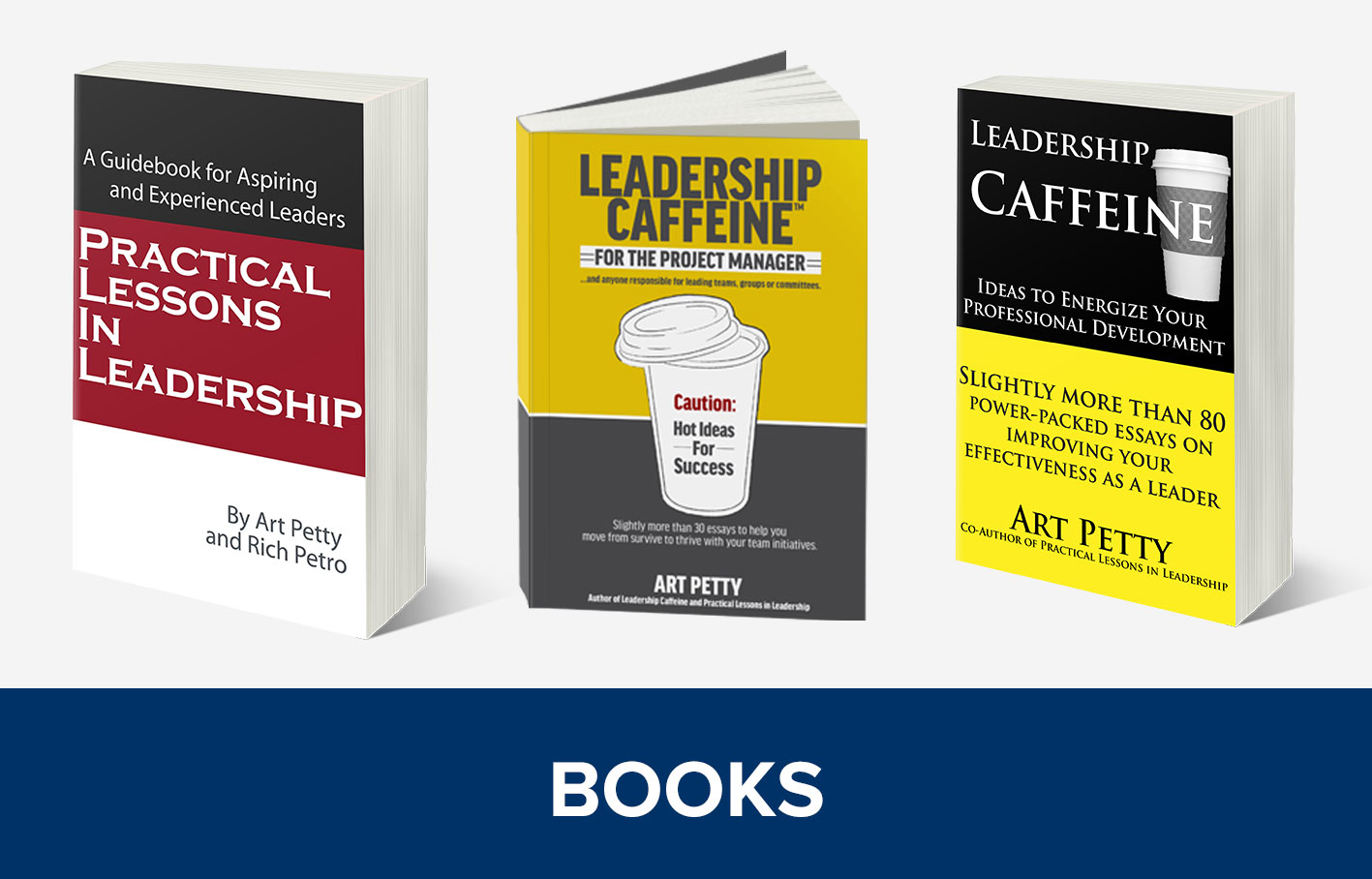
JUST RELEASED! Check Out Art’s New Book: Leadership Caffeine-Ideas to Energize Your Professional Development
Want More: Sign up for the new, Leadership Caffeine e-Newsletter. I’ll guard your e-mail address with ferocity, while sharing ideas to energize and inspire.
About Art Petty:
Art Petty is a Leadership & Career Coach and Strategy Consultant, helping motivated professionals of all levels achieve their potential. In addition to working with highly motivated professionals, Art frequently works with project teams in pursuit of high performance. Art’s second book (an edited, annotated collection of the most popular leadership essays), Leadership Caffeine-Ideas to Energize Your Professional Development, was released at the end of September in 2011.
Contact Art via e-mail to discuss a coaching, workshop or speaking engagement.
Leadership Caffeine-Do You Have the Courage to Kill Your Business To Save It?
Note from Art: no businesses were hurt in the writing of this post. Also, thanks to my good colleagues for agreeing to let me share a few of their thoughts and ideas in this post.
Fresh off of my recent podcast interview with Geoffrey Moore on his new book, “Escape Velocity-Free Your Company’s Future from the Pull of the Past,” I had the opportunity to sit down and chat with my informal Board of Advisors (2 CEOs, 1 GM and 2 Consultants and all experienced leaders) on this very topic…building a new business while running the old one. With my thanks for their input and ideas, here are the highlights.
Discussion Highlights:
-Slow to React: It was generally agreed that most businesses and most leaders struggle and fail at this endeavor of business reinvention. They often accept the need for radical business change too late and they move too slowly, passively and incrementally on the changes once the need is visible to all.
-The View Gets in the Way: the CEO contingent offered an explanation…but not a defense for their fellow club members, indicating the view from their chairs of the needs and wants of customers and stakeholders (board, employees, investors), often suggests more incremental than revolutionary action. One CEO described her firm facing a disruptive situation and the board and investors pushing back, with a rationale of, “We invested in this business, not this mythical one you are talking about. Make it work.”
“While the logic felt wrong, it was hard to overcome that mentality,” she added.
-Strong Leadership Required: All agreed that it takes strong conviction and true leadership to make what Moore describes in Escape Velocity as asymmetrical bets…investments on offerings and approaches radically different from the current ones. “Most of us are wired to solve problems within the framework of our traditional thinking. This world demands that we as leaders look at our business through different lenses and filters and sometimes that requires fighting through the dominant logic that our teams have used to succeed in the past.”
-Politicians Everywhere: the group offered that the need for radical change often begets a hyper-political environment, where land grabs and jockeying for position and resources often shift the focus off of the emerging business dilemma. Again, it was agreed that extraordinarily strong leadership was required to navigate this volatile political situation and survive.
-Don’t Forget the People Who Do the Work: To a person, the group indicated that even if the need is visible and the top-level commitment made, the failure of senior leaders to build a coalition of mid-level leaders is often fatal to the attempt to change.
What’s a Leader to Do?
1. Grow Your Paranoia: Andy Grove may have been right with his, ”Only the paranoid survive” mantra. The group encouraged the development of a healthy paranoia around the potential for the business to be disrupted. They suggested involving as many people as possible in environmental scanning and creating mechanisms for feedback and sharing.
2. Diversity Counts: Another participant suggested that diversity might be important. “Strive to build diverse teams…culture, background, experience and importantly, viewpoints. Your diversity might just save you when it comes to looking for solutions.”
3. Learn from Steve Jobs and Jack Welch: Invoke a bit of Steve Jobs and quit asking and start creating solutions for problems that people don’t know they have. The take-away: if your primary business planning tool is asking your customers what they need, you’re heading for an innovator’s dilemma event. Engaging with customers is great, but beware falling victim to their natural myopia.
Another group member suggested that Jack’ Welch’s s approach to the rise of the internet via his “Destroy Your Business.com” program is an appropriate model for engaging the broader organizational population in a significant change program.
4. Communicate, Communicate, Communicate: Follow Kotter’s advice on leading change and remember that “you cannot over-communicate” during these periods. In particular, create processes and events that keep stakeholders apprised of changing circumstances. If you’ve waited until the crisis lands to build some awareness with your stakeholders, don’t be surprised when they grow a bit testy and recalcitrant.
5. Recognize that Politics is a Full Contact Sport. Don’t underestimate rationalize away your need to play on the field of politics. Too many decisions take place in this environment, especially in larger organizations, for you to be unplugged.
6. Grow a Spine. If the situation calls for radical change and you’re in charge, it’s up to you to leave it all on the battlefield in pursuit of creating understanding and garnering stakeholder support for radical change.
The Bottom-Line for Now:
There’s nothing courageous about leading a business during good times where a rising tide effectively lifts everyone in the market. True leadership is forged in the fires of leading and managing and living through crises, including disruptive events. Perhaps the event doesn’t have to be your firm’s death knell, but rather a call to action in a new game of survival and success.
Art’s Weekly Leadership Message: Step Up to Cure Effective Dialogue Deficit Disorder
The medical community and drug companies have their ED malady and cure, but too many management and project teams suffer from their own form of ED…with two more D’s…EDDD… Effective Dialogue Deficit Disorder.
It’s not that people aren’t talking. There’s no deficit of hot air swirling around most meeting rooms. The issue is all about the quality of the dialogue.
Consider:
- All the firms who use last year’s operating plan and budgets as the basis for next year’s plan, without vetting and refreshing on what’s really happening in their markets and with their customers and within their own businesses. The future is difficult enough to predict in the best of circumstances. It’s laughably impossible to do it by focusing on the images in the rear-view mirror.
- Strategy meetings where the swirling discussions include opinions, facts, emotions, ideas and yes some political posturing, all without order, direction or purpose. Kudos for getting people together for the right reasons. Now, focus on managing the discussion flow to ensure purpose and progress.
- Performance evaluation processes that don’t connect to professional development steps. Your job is to connect evaluation to forward progress and development. You’re not a movie critic…you’re responsible for helping someone create the next scene in their own professional movie.
- Project Teams that develop detailed risk assessments at the onset of their initiatives, and fail to constantly refresh and update on the risk plan. The pesky thing about dealing with risk is that it is annoyingly unpredictable in many circumstances. Vigilance and review beats static advance planning here everyday.
- Ideation or brainstorming sessions that develop long lists of ideas that are forgotten as soon as the flipcharts come down. Ideas are truly horrible things to waste.
5 Ideas to Help Cure Effective Dialogue Deficit Disorder:
1. Don’t preoccupy on the past. Use past results to assess where YOU failed to anticipate and execute, and then focus on asking the hard questions about what’s changing with markets, customers and competitors. Build your plan around what you should be doing to succeed in the emerging world, not on what you did last year.
2. Change your discussion approach. Learn and apply the process of parallel thinking and discussion to eliminate the swirl and sort facts from emotions, opinions and ideas. De Bono’s Six Thinking Hats is a great place to start.
3. Learn to feedforward. Every opportunity to offer “feedback” on prior performance should be better viewed as an opportunity for what Marshall Goldsmith describes as “feedforward.” Again, cut out the rear-view mirror stuff and help people design their way forward.
4. If is was important enough to “assess” and develop a document, it’s very likely important enough to revisit and rethink. Don’t ask people and teams to just comply with a step or process (i.e. create a risk assessment). Instead, encourage frequent return trips to check assumptions and incorporate new learnings.
5. Never waste ideas! Don’t ask people to exercise their creative capabilities and then lose the precious output. Build an idea inventory and reference it frequently.
The Key Point:
Teach your teams to engage with purpose. Plan and manage your discussions to include reflection, assessment, direction and action. Every discussion is an opportunity to design something going forward. Throw in a consistent serving of accountability and you are on your way to building high performance into your working environment.
–
JUST RELEASED! Check Out Art’s New Book: Leadership Caffeine-Ideas to Energize Your Professional Development
Want More: Sign up for the new, Leadership Caffeine e-Newsletter. I’ll guard your e-mail address with ferocity, while sharing ideas to energize and inspire.
About Art Petty:
Art Petty is a Leadership & Career Coach and Strategy Consultant, helping motivated professionals of all levels achieve their potential. In addition to working with highly motivated professionals, Art frequently works with project teams in pursuit of high performance. Art’s second book (an edited, annotated collection of the most popular leadership essays), Leadership Caffeine-Ideas to Energize Your Professional Development, was released at the end of September in 2011.
Contact Art via e-mail to discuss a coaching, workshop or speaking engagement.
Management and Leadership Week in Review for Oct 21, 2011
Note from Art: Almost every week, I offer a recap of some of the more thought-provoking management and leadership content that I’ve tripped across recently. The selections are eclectic and always intended to stimulate your thinking. This week’s selections include content on The Great Tech War of 2012, ideas for strengthening your coaching skills, insight into three critical leadership skills and a book that offers something for all of us as we try to escape the pull of the past in our organizations.
-From FastCompany, The Great Tech War of 2012, is must reading for any student of strategy and business. And yes, we’re all living in “interesting times” as the saying goes, but the shifting landscape for our eyes and wallets in the tech sector is fascinating to an extreme. The article provides a great view of the battlefield and the combatants.
From the article: “To state this as clearly as possible: The four American companies that have come to define 21st-century information technology and entertainment are on the verge of war. Over the next two years, Amazon, Apple, Facebook, and Google will increasingly collide in the markets for mobile phones and tablets, mobile apps, social networking, and more. This competition will be intense.”
-From Scott Eblin: “How to Be a Really Useful Coach in Five Minutes or Less.” Scott is a true pro in the executive coaching world, and his book, The Next Level, is a must read for anyone seeking to climb to the next executive rank. His short post will take you less than five minutes to read and leave you armed with some timeless and time-saving good questions to use on the move. (For an added resource, check out my Leadership Caffeine Podcast Episode with Scott Eblin.)
-From HBR Blogs, Morton T. Hansen offers: “Three Leadership Skills that Count,” drawn from his work with Jim Collins for their new book, Great by Choice.
The focus is on leading and succeeding in chaotic times and Collins and Hansen identified three leadership skills: Productive Paranoia, Empirical Creativity and Fanatic Discipline, that in their opinion are critical. From the post: “You need all three leadership skills in an uncertain world: Fanatic discipline keeps you on track; empirical creativity keeps you vibrant; and productive paranoia keeps you alive.”
-Book Recommendation: Escape Velocity-Free Your Company’s Future from the Pull of the Past by Geoffrey A. Moore.
See my post and listen to my interview with Geoffrey Moore to understand why I’m a strong supporter of his latest work.
–
JUST RELEASED! Check Out Art’s New Book: Leadership Caffeine-Ideas to Energize Your Professional Development
Want More: Sign up for the new, Leadership Caffeine e-Newsletter. I’ll guard your e-mail address with ferocity, while sharing ideas to energize and inspire.
About Art Petty:
Art Petty is a Leadership & Career Coach and Strategy Consultant, helping motivated professionals of all levels achieve their potential. In addition to working with highly motivated professionals, Art frequently works with project teams in pursuit of high performance. Art’s second book (an edited, annotated collection of the most popular leadership essays), Leadership Caffeine-Ideas to Energize Your Professional Development, was released at the end of September in 2011.
Contact Art via e-mail to discuss a coaching, workshop or speaking engagement.
Leadership Caffeine Podcast #10: Geoffrey Moore on Escape Velocity
Organizations of all sizes and types, from high tech to manufacturing and not-for-profit, struggle with a common dilemma…how to escape the pull of the past as they look forward into a fast-changing and very different world.
If you’ve ever worked for or around a firm navigating the challenges of heading into new directions and leaving past ways and legacy products behind, you know how difficult this activity truly is for everyone involved. Many try and many fail.
Geoffrey A. Moore, the renowned high-tech strategist and author, perhaps best known for his book, Crossing the Chasm, a guide to helping firms move from early adopters across this fateful and often fatal canyon, is back with his latest book, Escape Velocity-Free Your Company’s Future from the Pull of the Past. In the book, Moore tackles this tough topic of moving beyond successes of the past towards new generations of offerings and growth.
This was a great, fast-moving interview with Moore, and unlike Chasm which was focused on high tech firms, Escape Velocity is remarkably relevant for all firms, regardless of sector. I’m excited about the fresh, practical content from Geoffrey and I suspect you will be wanting more from Moore after listening. Enjoy!
Leadership Caffeine Episode 10-Geoffrey Moore on Escape Velocity [ 26:14 ] Play Now | Play in Popup | DownloadShow Sound-Bites & Added Resources:
- The challenges that arise when trying to free your company from the pull of the past.
- Why our current budgeting, planning and operating systems fight us when it comes to escaping the pull of the past (and what to do about it).
- A new framework of frameworks, The Hierarchy of Powers, and why this is so important for planning and orchestrating organizational change.
- The questions you need to be asking and answering as you refresh and act on vision, strategy and execution.
- Understanding the Inventory of Tools available to support your efforts to move beyond the pull of the past.
- Great supplemental resource: Geoffrey Moore talking about Escape Velocity at Stanford (video)
About Geoffrey A. Moore:
Geoffrey Moore is a best-selling author and chairman emeritus of three consulting firms, The Chasm Group, Chasm Institute and TCG Advisors, all of which provide marketing strategy and organizational advice to leading high-technology companies. More information on Geoffrey, his books and services can be found at www.chasmgroup.com.
About the Leadership Caffeine Podcast:
The purpose of this show is to connect with leaders, management thinkers, authors, educators, entrepreneurs and anyone else passionate about improving and innovating in leadership and management. If you are interested in being a guest on the show, contact Art Petty.
Want More: Sign up for the new, Leadership Caffeine e-Newsletter. I’ll guard your e-mail address with ferocity, while sharing ideas to energize and inspire.
About Art Petty:
Art Petty is a Leadership & Career Coach helping motivated professionals of all levels achieve their potential. In addition to working with highly motivated professionals, Art frequently works with project teams in pursuit of high performance. Art’s second book, Leadership Caffeine-Ideas to Energize Your Professional Development, was released at the end of September in 2011.
Contact Art via e-mail to discuss a coaching, workshop or speaking engagement.