18 Ideas to Avoid Becoming a Ghost While Between Jobs

My recent post, “Ghosts of the Economy-Casualties of this Silent War” offered a sobering look at both the personal and societal impact of the economic situation. The comments from the readers were fascinating and in some cases, even more haunting than the post itself.

While the crystal ball that I use for forecasting is horribly foggy, my gut tells me that even as the economy begins to turn the corner, job growth will range somewhere between non-existent to painfully low and slow.  This bodes poorly for the millions of displaced professionals unaccustomed to being on the wrong side of the employment roll.

Real World Insights from Some Displaced Professionals:

I had a chance to chat with a number of recent and not so recent additions to the ranks of unemployed professionals, and to a person, they reported experiencing a range of emotions, most particularly, an uncomfortable feeling of helplessness, and in one case, an increasing sense of futility.

The individuals also agreed that the fight for economic and mental survival is a two-front war….taming the internal demons and turning what one described as creeping lethargy into action.

We discussed coping strategies, and here’s the list of very compelling suggestions offered up for anyone uncomfortably thrust into the role of formerly employed. If you or someone you know is dealing with this challenge, you might want to pass the ideas along. (Note: I’m not a job search advisor, so these strategies are above and beyond your nearly full-time work to find employment.)

Strategies to Avoid Becoming a Ghost

  1. Physical labor is goodbut, you can only work on the house or yard for so long. Get it out of your system in the first few weeks …set a deadline and then get back to work on professional pursuits.
  2. What I Did on My Summer Vacation: sooner than later, establish a strategy that will allow you to comfortably explain what you accomplished/did/learned that showcases your capabilities. The suggestions were great.
  3. Write something and publish it: write an article, write a book, start a biz or proff’l blog, write guest blog posts.
  4. Exercise your brain…a lot: Take or teach a class
  5. Get current: update your credentials through courses and CEUs.
  6. Read everything you can get your hands on about the latest and greatest in your field.
  7. Be heard. Guest speak. Opportunities abound in classroom and association settings.
  8. Get current with technology. If you do not understand Twitter, blogging, LinkedIn and RSS, then it’s time to catch up.
  9. Volunteer. There are many that can use your help.
  10. Keep leading. Apply your management and leadership skills to a big project at a nonprofit, your church or one of the schools in your community.
  11. Stay goal driven: set goals for tangible output…i.e. two blog posts per week, one article etc.
  12. Investigate a life change. A number of people are so fed up with the risk of a corporate life that they are interested in taking their risk a different way…through franchising or by doing something entrepreneurial.
  13. Work out. Fitness supports mental health. Work out daily to burn stress and improve sleep.
  14. Coach or cheer. Take in your children’s events and feel great about being there!
  15. Thank your spouse/significant other often. Oh, and stay out of their way. No moping around the house.
  16. Network, but learn to recognize the difference between constructive and wasteful networking.
  17. Choose your coffee buddies carefully: don’t hang out too much with other unemployed professionals and when you do, keep the discussion positive and forward looking.
  18. Find a kindred spirit or two and hold each other accountable to moving forward.

The Bottom-Line

This one’s going to hurt. The days of hundreds or thousands of applicants for a typical opening are not going to end soon. A healthy frame of mind supports action and vice-versa. Remember, this too shall pass. Since none of us no how long however, waiting is not an option. Keep moving and stave off your metamorphosis into a ghost. You’ll come out of this a different, and perhaps new and improved professional.

Ghosts of the Economy-Quiet Casualties of this Silent War

Note from Art: I’ve moved dangerously close to some controversial territory in this post.  I like that.  While my daily dose of wild-eyed optimism is not visible here, my core premise is always that the glass is half full and the most difficult problems are capable of being solved.  Our current and long-term economic challenges here in the U.S. are solvable, but as time moves on and critical missteps made, the solutions become increasingly difficult to conceive and implement.

Ghosts of the Economy

You’re to be forgiven if you’ve walked into a coffee shop, cafe, library or anyplace else where those “between jobs” congregate, and felt a chill run down your spine. It’s one of those feelings that we get when we sense that something is wrong but we can’t quite put our finger on it. Like the characters in Henry Miller’s The Turn of the Screw, it’s the flicker in the corner of our eye and the haunting sense that we just saw a ghost.

Most of us don’t know why we get that uneasy feeling as we look around at the tables filled with coffee drinkers busy reading, talking or pecking away at their laptops. Perhaps it has something to do with the time of day and the size of the crowd.

Why aren’t these people working?

The shops are filled with good, talented, motivated people used to going somewhere every day and feeling needed and part of something. They are the same Moms and Dads used to bringing home a paycheck, stashing some money in the college fund, paying the bills and using the extra for a vacation or a new car. That stuff is on hold for now.

You don’t notice it as much in the newly unemployed. Their emotions run from panic to anger to optimism. Some promise to “take a few weeks off” and enjoy the freedom from the rat race. Others get down to work quickly on their resumes and networking activities. Mostly, they meet for coffee with those in similar situations.

It’s the ones that have been out for a few months or longer that give you that strange sensation. There’s something different about them. They are the same formerly productive, needed, vibrant people reduced to shadows of their former confident selves. The strength is faded just a bit from the voice, the shoulders are just slightly slumped and the spark in the eyes doesn’t seem to burn with the intensity of prior days.

We’re watching as people are turning into ghosts of their formers selves. No, not the ghosts of myth. These ghosts still take up space and consume and breathe, but nonetheless they are noticeably transparent, moving through the ether with the rest of us, but not having the same impact on life and the physical environment.

The transformation accelerates as people take refuge from the cafes and coffee shops and begin to barricade themselves inside their homes, in front of the television or computer screen. CVs still get sent, but people are going through the emotions. After a lifetime of focus and purpose…sometimes no more than needing to be somewhere at a certain time to do their part…big or little, there is nothing.

The Ghosting of America

I doubt that my use of the word, “Ghosting” is accurate, but it feels right here. While critics of my commentary above will accurately highlight that unemployment is nowhere near levels of the Great Depression and that there are encouraging signs on the economic front, it’s hard to ignore the ghosts around us.

Some are waiting for the economic stimulus to kick in. We all hope that something works, but the confidence isn’t there, because there’s little substance behind it.

My own unofficial observation is that we are in serious danger here in America of becoming a nation with great roads to support the movement of everyone else’s goods. Roads everywhere are under construction and big orange signs proudly reference ‘We’re putting America to Work!” They credit one of the many trillion dollar recovery acts at work.

I like good roads. Our improved infrastructure will ensure that deliveries of non-U.S. goods get to us quickly and in good condition. Meanwhile, is one more factory being built to support the research, development and manufacture of something that someone is willing to pay for, or are we focusing for now on the roads?

Lenin was Right, Kind Of:

Instead of selling the rope to hang ourselves with, we sold the ability to know how to make the rope to someone else, so that we could buy the rope and metaphorically hang ourselves.

There’s a great deal of discussion recently in the business press about the sad discovery that as we deftly exported our manufacturing in the name of cost and competition, we successfully gave away something called the “Commons.” While the term is a bit abstract, it references all of the ancillary activities, technologies and know-how that surround core industries.

It starts with moving manufacturing offshore and ends up with not only the manufacturing and the suppliers, but the research and development and future “know how” that we’ve given up. The product begets companies improving the product and others seeking to leverage the know-how and innovations in other products. Soon, the place where the idea started is administering and no longer fostering and facilitating new idea generation.

After the ability to make is gone, the ability to create begins to fade.

A number of articles have been published showing that American firms in America cannot and could not manufacture the Kindle device that I read the Wall Street Journal on this morning. We don’t have the know-how, the access to the intellectual property and the physical facilities to produce.

Ooops, I just received an e-mail update on a new road construction project starting here in Illinois thanks to some nitwit’s belief that building roads will stimulate the economy. That’s good. We’ll have better roads to travel on and drive past the vacant retail stores in our communities.

In the words of Heinlein, “The Roads Must Roll.”

The Solutions:

There are no silver bullets, but there are some bullets that will make a dent!

  • Incentives, not disincentives to research, develop and manufacture.
  • A tax system that encourages not discourages business. We are dangerously close to having the highest corporate tax rates in the world, supplanting all major European countries. High corporate and personal taxes have proven fatal to economies for decades.
  • Programs that train and educate and leverage the talent withering away in our communities on something other than road building.
  • Programs that support basic and applied research on technologies that will dominate the future. The Romans mastered road building…we don’t need to bank on this ancient art as our salvation.
  • Recognition and support for the development of the future Commons. There is no going backwards…what’s been lost is gone for good. It’s about inventing the future now.

But, this is tough stuff and it flies in the face of doing the things to get re-elected. It takes longer to translate into people having more to buy more, and it’s not bankable in November.

Oh well, who is John Galt?

Leadership Caffeine: Things I Wish Someone Would Have Told Me When I First Became a Leader

Note from Art: this one’s with a little help from my friends.  I’ve been working a great deal with first-time leaders recently (my favorite groups!) and I posted a tweet to the extremely talented group of great people that I follow on Twitter asking what they wish someone would have told them when they started out in their leadership careers. Here are a few of their insightful thoughts with attribution, commingled with thoughts of my own.

Things I Wish Someone Would Have Told Me When I Became a Leader

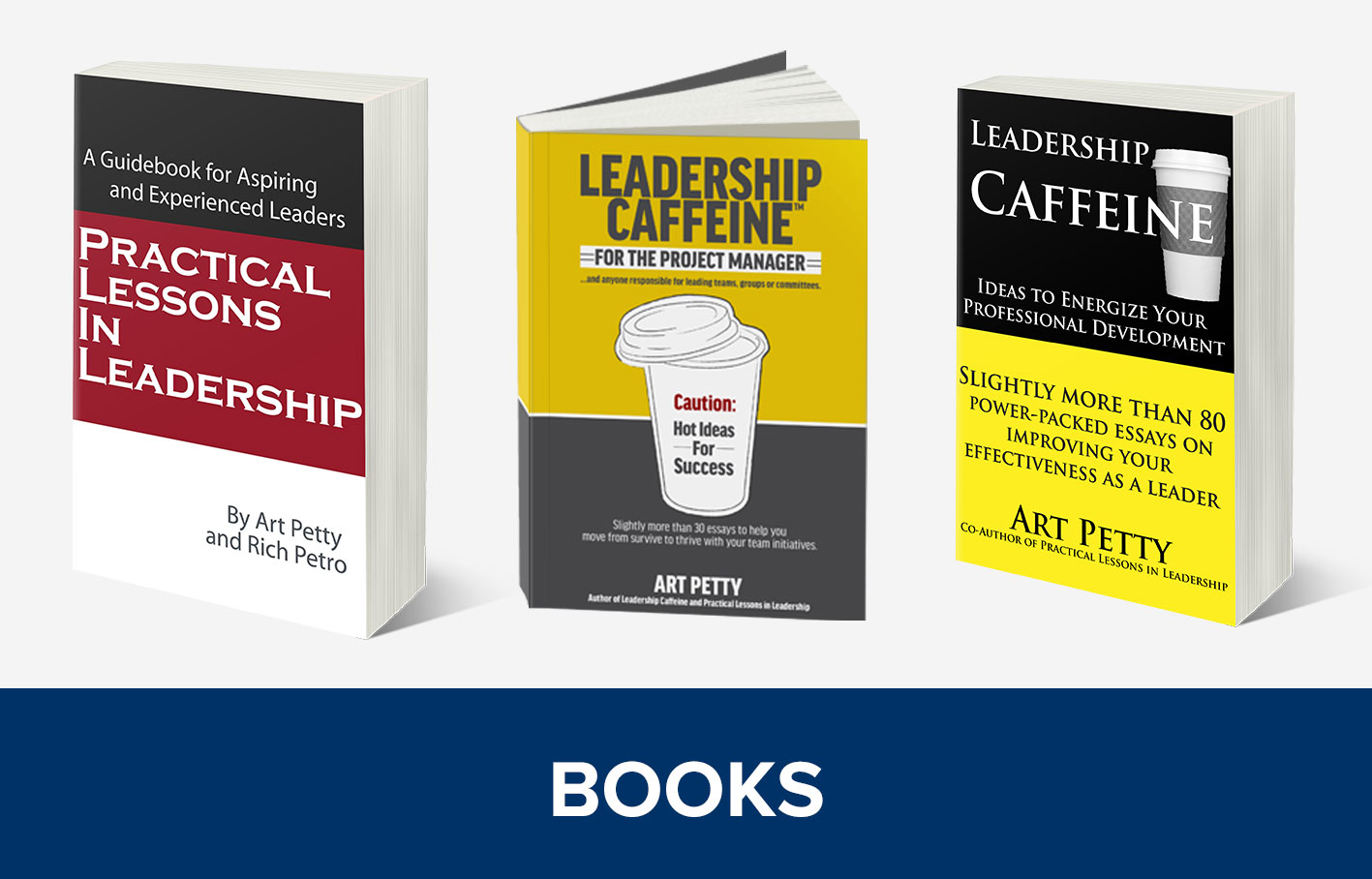
One of the motivations in writing Practical Lessons in Leadership a couple of years ago was to take a stab at leaving behind that letter we all wish we would have received when we first became leaders.  You know the letter…it’s the one that if we had read it and actually followed the advice, we might have short-circuited a few years of learning things the hard way.

The short-story on what my letter to early career leaders includes:

  • Not everyone should lead. It’s OK to be an individual contributor, although you will still need to develop and draw on your leadership skills to succeed.
  • You need to realize sooner than later that your role as a leader is about creating the environment and providing the support for others to do great things and prosper.
  • Leading is hard work. As one wise man indicated, it’s a profession, with a body of knowledge waiting to be discovered.
  • Credibility is your most valuable currency as a professional and a leader. Everything you do must reinforce your credibility.
  • Treat everyone with respect. All of the time. No exceptions.
  • Leading is all about everyone but you. Get over yourself.
  • You’ll spend too much time with the wrong people. Focus on the people that want to grow, develop and succeed.
  • The highest respect you can pay someone is to truly pay attention by supporting their development.

And from some of my colleagues on Twitter

-From: @GinaAbudi on influence and communication:

“Even as a leader you STILL must be able to influence others effectively.”

On communication: (paraphrased): Keep your communication open.

-From @DavidWLocke on the power of a thank you

“Years ago, I almost fell over when an engineer thanked me for working on his project.”

-From @wallybock:

“I wish I knew the importance of role models and mentors.”

“People in my classes talk about skills they wish they had or knew to get training in. The most desired skill clusters were (in order) talking to team members about performance/behavior and dealing with the boss.”

-From @mjasmus

“I wish I knew that the people part of leading would be the most complex, messy and difficult.”

I wish I knew that leading isn’t about the push. It’s more about the pull.”

-From @rseres

“Leadership is not about control.”

“As a leader, you don’t have to have all the answers.”

-From @SherpaDe

“Good listening is a skill to be taken seriously.”

“Learn to ask great questions and stay curious.”

Some smart, experienced people with great advice for early career leaders!  Thanks to all.

The Bottom Line

If you are an experienced leader with responsibility for supporting the development of leaders around you, remember to pay forward the lessons that you’ve learned over time and frequently learned the hard way.

While we will all have our own unique leadership experiences, we owe it to the next generation to do everything in our power to help them along. Never mind that no one was there to help you. You’ve learned that you are better than that.

And for those of you embarking on your leadership careers, read, listen and learn. Oh, and while you are at it, heed Wally’s advice and seek a role model or mentor. There are more than a few experienced leaders out there happy to help you along your journey.

Art Rants: The Insane and Confusing Battle for the Pipe Into Your Home

All across America, legions of streetwalkers (not that kind!) have been dispatched to your home to help you deal with the serious issue of your television service. Or is that your Internet service? Or your phones? Or your wireless phones? Or your toaster?

Before you know it, you’ll be pulling out stacks of old bills from your cable/internet/land-line/cell phone providers and nodding your head as the nice streetwalker from BIGCO highlights how very nicely how dumb it would be to stay with what you have, when you could go with the latest INTERGALACTIC service guaranteed to make all of your problems go away and leave you with just one bill.

You’ll likely not say “yes” to the first streetwalker, but once the seed has been planted, you won’t be able to resist digging into the mystery of whether standardizing on one company might just be one less thing to worry about.

If you’re like me, you’ll pick up the phone and call OTHERBIGCO and give them heck for clearly skunking you these past several years. Your nice Rep will apologize and then proceed to launch into a pitch for her UNIVERSAL-PLEX service. She’ll politely scoff at the claims of BIGCO and point out that her technology is so far superior that there is no comparison.

If the Rep does a good job, as mine did, you’ll find yourself investing more time in planning out your new home cable/tv/hdtv/dvr/cell/landline/voice/toaster integrated system and starting to warm to the idea. You’ll probably want time to think it over and to check and make certain that your toaster has the right interface card.

A few more calls later, you’ve discovered the fine print. One company has a two-year contract, one has a one-year contract and the other has no contract. Installation fees range from a hundred-gazillion dollars…..to almost free. Upgrading to other services…or adding toasters or TVs to the network will require replumbing your house or more than likely, adding a new cell tower in your backyard, but they are all different.

Oh, and don’t forget to ask about what happens after the promotional period ends. I’m not certain, but I think in one case, I have to retire the national debt of a third-world country and pay for the children of my rep to go to college at the end of the six-month promotion period.

You realize after 20 hours of work that you’ve become involved in some form of new, maniacal game brought to you by people that have created rules that don’ benefit anyone but them. It’s your job to figure out the catches and traps and gotcha’s! I’m not certain that you as the consumer can win this game, but you can definitely lose. I think the object is to lose the smallest amount possible for the shortest possible commitment time.

The Bottom-Line:

Hey cable/wireless/internet/cellphone companies, your packages stink, your rules are vague and confusing and your marketing sucks.  Oh, and your tactics stink.

Did I mention that the arrogance of suggesting that I pay you to install your new technology in my home so that I can pay you more than I used to for a committed period of time is….well…it’s just plain arrogant.

It’s all about you…and nothing about the customer. We’ve figured out that our lives are now dependent upon you for thousands of dollars per year in fees…and we know that it is your goal to do nothing more than create more ways to suck more out of us, tie us up and leave us confused.

I think I’ll pass and stick with what I have. It’s cheaper and I can tell you to pound salt and turn it all off tomorrow if I decide to go off the grid. Ahh, the feeling of power.

OK, I think I’ll go read a book now. Right after I respond to the tweet from my toaster.

Want Different Results? Change Your Definition of Success and Don’t Forget to Align the Measurements

The old adage of “you get what you measure” is an old adage for a reason.  It’s generally true.

There was the sales manager who implored his team members to focus on finding new customers. The compensation plans were based on a single revenue number, and naturally the sales reps focused on the path of least resistance by selling mostly to pre-existing customers.

Another sales manager measured activity to the smallest level of detail and paid her sales reps in part according to activities, not results. The theory was that if people are working hard day in and day out on the “right” activities, the sales will follow. This one actually worked OK until the market shifted and the rigid activity and compensation structure failed to change with the new dynamics in the market. The definition of “right” had changed.

And then there’s the CEO who wonders why his sales and marketing executives don’t seem to work with each other. Of course, they have no shared measures or accountabilities, in spite of the true need for collaboration in certain areas.

LIfe and Death Definitions and Measurements:

In a much more serious perspective and true life and death view on success and measurement, the new U.S. leader in the Afghan conflict, General Stanley McChrystal recently redefined the goals for security and success for the increasing number of troops in the region: “The point of security,” he says, “is to enable governance … My metric is not the enemy killed, not ground taken: it’s how much governance we’ve got.”

Without context and without understanding the actions being taken to support the new measurement, McChrystal’s words might ring hollow. However, the change in emphasis from defeating the enemy the old-fashioned way takes into account the reality that the people we’ve been trying to help have flocked to the other side as our traditional tactics have killed both enemy combatants and innocent civilians. The cultural reality is that regardless of prior political leanings, the son of a peaceful civilian killed by a U.S. airstrike quickly becomes the enemy combatant out to avenge his father’s death. And so on.

In support of the new definition of success, operations are being executed to avoid civilian casualties, with emphasis on providing the security needed for governance to take root and spread. Whether the strategy will work or not remains to be seen, but the shift in the measure of success is driving a profound shift in activities and approaches.

The Bottom Line for Now:

Measurement is a powerful leadership tool for driving behavior and change. Success should be clearly defined and the measures employed must reinforce the behaviors needed to drive success.

In the sales example above where the manager was concerned about achieving a healthier proportion of new sales from new customers, his definition of success was right, but his measurement system told the reps that it didn’t really matter where the sales numbers came from as long as they showed up. The simple addition of a “new sales from new customers” target in the total quota formula helped the team orient to new customer capture—a strategy that ultimately strengthened the firm’s market position versus competitors and enlarged the pool of total customers to cultivate over time.

If your results aren’t matching up to your definition of success, take a look at both your definition and your measurements. It may be time for one or both to change.

Next Page »

  • Art Petty

    Art Petty Welcome to Management Excellence where the focus is on building better leaders and creating high performance organizations.

  • Building Better Leaders

    Building Better Leaders - Move Your Career Forward

    Art Petty's Building Better Leaders programs in Leadership, Management and Developing as a Senior Contributor offer powerful and practical guidance for motivated professionals.

    All programs available on-site in group format and select programs available in a distance learning PLUS personalized mentoring format.

    Visit Building Better Leaders to find a program to help you or your team move forward.  And don't forget to subscribe to the Building Better Leaders Leadership Tip of the Day.

  • Management Excellence Tools

    Download the Management Excellence Guide to Effective Trade Show Marketing.


    What's Your Strategy & Execution (STREX) Quotient? Download and use the survey to help you gauge your organization's Strategy & Execution effectiveness and identify areas for improvement.


    e-book-Leadership and the Project Manager - Developing the Skills that Fuel High Performance Download the pdf or go to the e-book pages on this site and contribute to the conversation

Blog Subscriptions

Email:

RSS Feed Subscribe to Management Excellence

Connect With Me On

View Art Petty's profile on LinkedIn
Art Petty on Twitter

E-Newsletter Mailing List

Join my e-newsletter mailing list and receive the latest in best-practices content for leadership, sales & marketing and strategy.
E-mail:  
Privacy by SafeSubscribe

Alltop